
Why Are Spiders More Active Inside Homes During Winter in Lafayette?

During winter in Lafayette, Indiana, many homeowners notice more spiders inside their homes. This often leads to concern and confusion. People wonder why spiders suddenly appear in basements, bathrooms, garages, and corners when it is cold outside. This behavior is normal and predictable. Spiders move indoors for warmth, shelter, and food. This guide explains why spiders become more active indoors during winter, what attracts them, and how pest control in Lafayette solutions help protect your home. The information below is written to help homeowners, renters, and property managers understand spider activity using clear facts and simple steps. Winter spider activity indoors is not a sign of poor hygiene. It is a natural response to the weather changes common in Indiana. When temperatures drop, spiders look for stable environments. Homes provide steady warmth, moisture, and protection from insects. Learning how spiders behave in winter allows homeowners to reduce sightings and prevent infestations safely and effectively. Understanding Winter Weather in Lafayette, Indiana Lafayette experiences cold winters with freezing temperatures, snow, and low humidity. According to the National Weather Service, average winter temperatures in Indiana often fall below freezing for extended periods. Outdoor insects become inactive or die, and spiders lose access to food and shelter. Spiders are cold-blooded. They cannot regulate body temperature. When outdoor conditions drop below their tolerance level, survival becomes difficult. Many spiders die outdoors, but others adapt by moving into protected structures such as homes, sheds, and commercial buildings. Key winter conditions that affect spiders include• Prolonged freezing temperatures• Snow cover that removes outdoor hiding places• Reduced insect activity outdoors• Dry air that forces spiders to seek moisture These factors push spiders toward human structures in Lafayette and nearby communities. Why Spiders Enter Homes During Winter? Spiders Seek Warmth Homes stay warm during winter. Heating systems keep indoor temperatures stable. Even unheated spaces like garages are warmer than outdoor air. Spiders sense these temperature differences through small gaps and openings. Once inside, they remain active because warmth supports their metabolism. Homes Offer Shelter and Safety Outdoor spider habitats such as wood piles, leaf litter, and garden beds become harsh during winter. Snow and ice destroy webs and hiding spots. Inside homes, spiders find walls, ceilings, crawl spaces, and storage areas that protect them from weather and predators. Indoor Insects Provide Food Spiders follow food. Many insects also move indoors during winter, including flies, ants, and small beetles. According to the University of Kentucky Entomology Department, spiders often enter homes because prey insects are already inside. Where insects go, spiders follow. Cracks and Gaps Make Entry Easy Most homes in Lafayette have small structural openings. Common entry points include• Door gaps• Window frames• Utility line openings• Foundation cracks• Vents and siding seams Spiders do not chew or damage structures. They simply use existing gaps to enter. Are Spiders More Active or Just More Visible? Many homeowners believe spiders become more active in winter. In reality, spiders are easier to see indoors. They were already present in wall voids and hidden spaces. Winter forces them into visible areas as they search for food and moisture. Reducing clutter outdoors also contributes. Without leaves and debris outside, spiders move to indoor corners, ceilings, and storage areas. Common Spiders Found Indoors During Winter in Lafayette House Spiders House spiders are the most common indoor spiders in Indiana. They build webs in corners, basements, and attics. They pose no threat to humans. Wolf Spiders Wolf spiders do not build webs. They hunt insects on the ground. Homeowners often see them in basements and garages during winter. Their large size causes alarm, but they are not aggressive. Cellar Spiders Also called daddy long-legs, cellar spiders prefer damp areas like basements and crawl spaces. They feed on other insects and even other spiders. Jumping Spiders Jumping spiders may enter homes but remain less active in winter. They are harmless and often seen near windows. Are Winter Spiders Dangerous Most spiders in Lafayette are harmless. According to the Centers for Disease Control and Prevention, spider bites are rare and usually mild. Indiana does have brown recluse spiders, but confirmed populations are limited, and misidentification is common. Key spider safety facts• Spiders avoid humans• Bites happen only when spiders are trapped or threatened• Most bites cause mild redness or itching• Serious reactions are rare Spiders also help control indoor insect populations. Why Spider Activity Increases in Basements and Bathrooms? Moisture Attracts Spiders Basements and bathrooms provide moisture. Spiders need water to survive. Leaks, condensation, and damp air create ideal conditions. Insects Gather Near Water Moist areas attract insects like silverfish and flies. This provides food for spiders. Limited Disturbance Basements and storage areas often receive less human traffic. Spiders prefer quiet spaces where webs remain undisturbed. How Long Do Spiders Stay Indoors During Winter? Spiders may remain indoors throughout winter and into early spring. Once inside, they rarely leave voluntarily. Many spiders die naturally due to age. Others reproduce, leading to increased sightings. Spring warmth does not always push spiders back outdoors. Instead, they may remain inside unless removed or excluded. Signs of a Growing Spider Problem Occasional spider sightings are normal. A growing problem may include• Frequent web buildup• Spiders seen daily• Presence of egg sacs• Increased insect activity indoors These signs suggest conditions that support spiders year-round. Preventing Spiders From Entering Your Home Seal Entry Points Seal cracks and gaps with caulk and weatherstripping. Pay attention to foundations, windows, and doors. Reduce Indoor Insects Control insects to remove their food sources. Clean kitchens, fix leaks, and store food properly. Declutter Storage Areas Remove boxes, papers, and unused items. This reduces hiding spots. Control Moisture Use dehumidifiers in basements. Repair leaks and improve ventilation. Outdoor Maintenance Trim vegetation away from your home. Remove leaf piles and wood stacks near foundations. Winter Spider Prevention Checklist Indoor Spider Control Methods Vacuuming Vacuum spiders, webs, and egg sacs. Dispose of the vacuum bag immediately. Sticky Traps Sticky traps help monitor spider activity. Place them in basements and along walls.
Seasonal Guide to Termite Control in Lafayette, Indiana
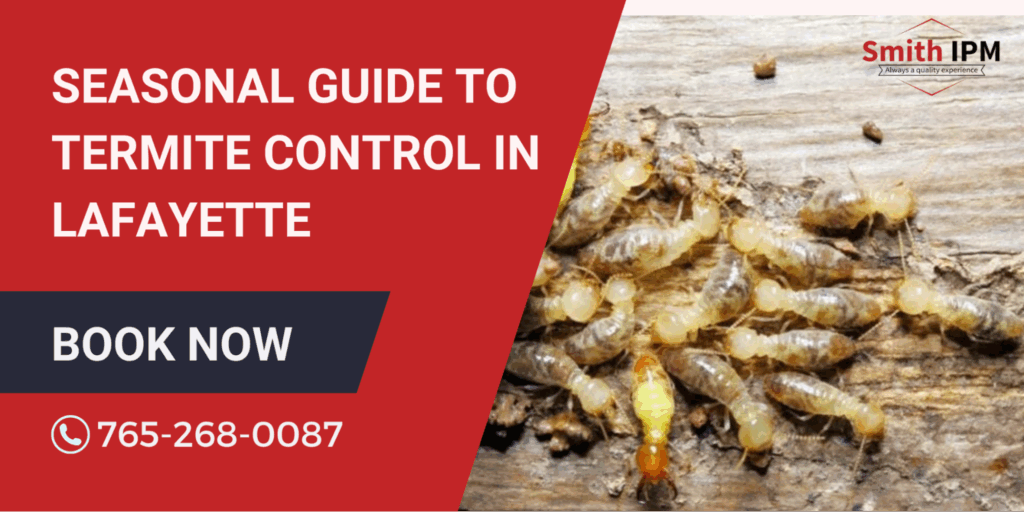
Termites are one of the most destructive pests in Indiana. Each year, they cause billions of dollars in property damage across the United States, and Lafayette homeowners are not immune. Unlike ants or spiders that are visible, termites often work silently inside walls, crawlspaces, and foundations. By the time you notice damage, the infestation may already be severe. This seasonal guide to termite control in Lafayette explains how termite activity changes throughout the year, what signs to look for, and why preventive measures are essential. With the right approach, you can protect your home, avoid costly repairs, and ensure long-term peace of mind. Why Termite Control Is Essential in Lafayette? Termites thrive in Indiana’s climate, where warm summers and wet springs create ideal conditions for colonies. According to the Environmental Protection Agency (EPA), termites can compromise the structural integrity of homes by feeding on wood and cellulose-based materials.. Key Facts About Termites in Indiana These factors make proactive termite control a necessity for Lafayette property owners. Seasonal Termite Activity in Lafayette, Indiana Termite behavior changes with the seasons. Understanding these patterns helps homeowners plan inspections and treatments effectively. Season Termite Activity Risk Level Recommended Action Spring The swarming season begins. Winged termites emerge to start new colonies. High Schedule inspection. Look for swarmer wings near windows and doors. Summer Colonies grow rapidly underground. Moisture increases activity. High Treat soil around the foundation. Fix leaks and drainage issues. Fall Termites move deeper underground as temperatures cool. Moderate Seal entry points. Monitor basements and crawlspaces. Winter Activity slows but termites remain active in heated structures. Low-Moderate Continue monitoring. Ensure ongoing protection with preventive plans. Spring Termite Control in Lafayette Spring is the most critical time of year for termite control Lafayette homeowners must prioritize. As temperatures rise, swarmers (winged termites) leave their colonies to create new ones. Detecting and preventing them early is key to avoiding structural damage. Signs to Watch in Spring Discarded wings near doors, windows, or light fixturesSwarming termites shed their wings after finding a new nesting spot. Piles of wings near entry points or light sources are an early indicator of active colonies nearby. Homeowners often confuse them with ant wings, making professional identification important. Mud tubes along foundations or wallsSubterranean termites build pencil-sized mud tubes to travel between soil and wood. These tubes protect them from light and dryness. Finding them along your foundation, basement walls, or crawlspaces is a strong sign of infestation that requires immediate professional attention. Soft or hollow-sounding woodTermites feed from the inside out, leaving wood looking solid on the surface but hollow within. Tapping on baseboards or beams may reveal a papery sound. Floors that sag or wood that easily crumbles are red flags of ongoing termite damage. Spring Prevention Tips Schedule a professional inspection before peak swarming seasonA trained technician can spot early signs of termite activity before swarms expand. Spring inspections help catch hidden infestations and provide time for treatment, preventing colonies from spreading into your home. Eliminate wood-to-soil contact around the foundationDirect contact between wood and soil creates a perfect entry point for termites. Keep wooden posts, decks, or siding raised above soil level. Use concrete bases or metal barriers to block access and reduce the risk of infestation. Trim shrubs and plants away from sidingDense vegetation holds moisture and creates hidden pathways for termites to move from soil to wood. By trimming shrubs and keeping mulch at least 12 inches away from siding, you reduce shelter for pests and make inspections easier. Summer Termite Control in Lafayette Indiana summers bring heat and humidity, creating ideal conditions for termite colonies to thrive. During this season, termites are most active underground, expanding tunnels and seeking new food sources. Without preventive measures, their activity can quickly spread to wooden structures in and around Lafayette homes. Summer Risks Termites expand their feeding areasIn summer, subterranean termites increase tunneling, reaching farther from the main colony in search of wood. This expansion often brings them into direct contact with decks, foundations, and wooden supports. Because the activity is hidden, damage may go unnoticed until it becomes extensive. Moisture problems (leaky pipes, clogged gutters) attract termitesExcess moisture in soil or around your foundation creates the perfect environment for termites. Leaking outdoor spigots, clogged gutters, or poor yard drainage all keep wood damp and easier for termites to invade. Moisture control is one of the most critical steps in summer termite prevention. Wooden decks, fences, and sheds are vulnerableOutdoor wooden structures face increased risk during humid summers. Termites attack untreated or older wood directly connected to soil. Deck posts, fence bases, and shed floors often serve as easy entry points into a property. Without treatment, termites can spread from these structures to the main house. Summer Prevention Tips Fix leaks and improve yard drainageCheck outdoor faucets, air conditioning lines, and gutters regularly. Repair leaks and redirect downspouts away from the foundation. Good drainage keeps soil dry, reducing conditions that attract termite colonies. Store firewood away from the homeStacks of firewood near exterior walls are an open invitation for termites. Always store firewood at least 20 feet from the house and off the ground on a rack. This prevents colonies from moving directly into your structure. Request soil treatments around the property perimeterProfessional soil treatments create a protective barrier that prevents termites from reaching your home. During summer, when termite activity is highest, perimeter treatments are one of the most effective defenses to keep colonies under control. Fall Termite Control in Lafayette As temperatures drop in Indiana, termites retreat deeper underground, but infestations often continue inside heated homes. Fall is the season to strengthen your defenses before winter sets in. Preventive actions taken now can stop hidden colonies from thriving unnoticed during the colder months. Fall Risks Termites seek shelter near heated structuresWhen outdoor soil cools, termites move closer to warmth. Heated homes, basements, and crawlspaces become attractive nesting areas. Infestations may increase indoors during fall, making professional monitoring essential to prevent colonies from spreading further
Spring Garden & Yard Maintenance: Natural Pest Prevention for Your Home

As the gentle thaw of winter gives way to spring, our yards come alive with greenery and flowers sprouting up out of gardens. But, it’s not just the foliage that is returning to the landscape: animals and insects are also coming out of their winter dormancy to be seen. This seasonal shift presents homeowners with a unique opportunity: to cultivate not only a beautiful spring garden and yard, but also healthy ecosystems that naturally resist pests. Embracing natural pest prevention is more than just a trend; it’s a mindful approach to stewardship, one that benefits our homes, our families, and the environment. A well-kept yard is less hospitable to pests, creating a natural barrier against unwanted invaders. At the heart of natural pest prevention lies Integrated Pest Management (IPM), rooted in understanding the life cycles of pests and their interactions with the environment. Spring Garden Planting for Pest Control One of the most charming and effective methods of natural pest control is companion planting. This practice involves strategically planting different species of plants near each other to create mutually beneficial relationships. Some plants act as natural pest prevention, while others attract beneficial insects, or improve soil health. Some plants have formed highly specific relationships with other plants, while others are much more diverse in the plant communities they can benefit. Some examples of both include: The benefits of using companion plants extend beyond pest control. They can also enhance pollination, improve soil fertility, and even increase yields. By thoughtfully planning our gardens, we can create a vibrant and self-regulating ecosystem. Pest-Resistant Plants Another powerful tool in our natural pest prevention arsenal is the use of pest-resistant plants. These varieties possess inherent characteristics that make them less susceptible to pests and diseases. Pest-resistant plants often exhibit traits such as thick cuticles, strong cell walls, or the production of natural repellents. Certain cultivars of roses, herbs like rosemary and lavender, and many native plants that have evolved alongside local pests not only repel uninvited guests, but also add natural beauty and pleasant aromas to your spring garden. Yard Maintenance for Natural Pest Prevention Imagine your spring garden as a stage. A cluttered stage, strewn with debris and overgrown thickets, provides ample hiding places for unwelcome guests, those who disrupt the harmony. A tidy yard, however, is a sanctuary, a place where balance is restored. Yard maintenance may seem daunting, but a few simple tasks can really help to reduce pest populations: Building the Community Together As the Indiana spring unfolds, we are reminded of the interconnectedness of nature. From the intricate webs spun by spiders to the symbiotic relationships between plants, your yard and spring garden is a living ecosystem that deserves care and attention. By embracing natural pest prevention strategies, we can create beautiful, healthy, and sustainable landscapes that benefit both our homes and the environment. Let us take this opportunity to cultivate a deeper appreciation for the delicate balance of nature and to work in harmony with the world around us.To keep pests out of your home or business, trust the best for local pest management in the Greater Lafayette Indiana area, Smith Integrated Pest Management LLC.
Is Pest Control Necessary in the Winter in Cold States? Top Reasons You Shouldn’t Skip It
As winter sets in and snow blankets the landscape, many homeowners assume that pest problems have come to an end. But the truth is, winter can be a hidden battleground for certain pests seeking refuge in your cozy home, escaping the harshness of the elements. Let’s uncover why pest control in colder months is not just a good idea, but a necessary step to maintain a pest-free sanctuary for you and your family. Misunderstandings About Winter Pest Control It’s a widespread myth that pest activity decreases in winter. While some insects may naturally die off, many others—especially rodents and overwintering insects—are on the lookout for a warm place to call home, and that often means your house. If you neglect pest control during these months, you risk facing serious infestations and expensive repairs down the line. Remember, just because pests are out of sight, doesn’t mean they’re out of mind. Common Winter Pests in Cold States Why Winter Pest Control is Crucial Effective Pest Control Strategies for Winter The best offense is a good defense! Start by sealing any cracks and openings, installing weather stripping, and ensuring that doors and windows are tightly secured. By winter-proofing your home, you can drastically minimize the risk of inviting pests inside. Regularly inspect your home for any signs of pest activity—be it droppings, nesting materials, or visible damage. Create a maintenance plan with a trusted pest control professional to help you stay ahead of any potential infestations. Don’t let misconceptions give you a false sense of security this winter. Pest control is just as necessary in cold climates as it is in any other season. Armed with the right knowledge and strategies, you can protect your home from winter pests and enjoy a safe, healthy living environment. Remember, prevention is always preferable to tackling an infestation later, so take proactive steps today! Take care of your winter pest concerns! Contact us to schedule an estimate.
Simple Pest Management for Autumn
Autumn is a time of transition, not only for nature but also for your home and garden. As the days shorten and temperatures drop here in Indiana, certain pests become more active, while others seek shelter for the winter. Integrated Pest Management (IPM) offers a sustainable and environmentally friendly approach to dealing with these pests. You might think that as we move into the colder months, and the bugs seem to disappear, that you don’t need to worry about pests again until next spring. In actuality, there is plenty to be done to prepare for the spring to properly implement an IPM strategy and pest proofing methods. Understanding Integrated Pest Management (IPM) Integrated pest management is a holistic approach to pest control methodology that emphasizes prevention and monitoring over the indiscriminate use of pesticides. It involves a combination of technical pest management techniques, including: Common Autumn Pests in Indiana Tips for Simple Pest Management in Autumn By adopting these simple pest management techniques for Indiana this fall, you can effectively manage pests in your home and garden while minimizing the use of harmful chemicals. Remember, prevention is key, and a healthy garden is less susceptible to pest problems. If you need help with your simple pest management this fall, contact us to schedule an estimate.
Exploring the Springtime Ants of Indiana:

Tiny Marvels in Motion: As the chill of winter gives way to the gentle warmth of spring, the landscape of Indiana undergoes a remarkable transformation. Trees begin to bud, flowers bloom, and the air becomes infused with the sweet scent of rejuvenation. Amidst this seasonal shift, another fascinating phenomenon unfolds beneath our feet – the awakening of Indiana’s bustling ant colonies. Ants, are often overlooked in the grand tapestry of nature. In fact, they are among the most industrious and sophisticated creatures on Earth. In Indiana, the changing seasons have a profound influence on the environment. Certainly this arrival of spring signals a time of heightened activity for these tiny marvels. One of the most captivating aspects of springtime in Indiana is witnessing the waking of ant colonies from their winter dormancy. Throughout the colder months, many ant species retreat into their nests. Here they spent the season conserving energy and relying on stored food supplies to survive. However, as temperatures rise and daylight hours increase, these resilient insects begin to stir once again. Venturing out from their underground dwellings, worker ants embark on a quest for food, forging intricate trails across the landscape in search of sustenance. Alongside them, winged reproductives take to the skies in spectacular mating flights. These are truly mesmerizing spectacles that mark the beginning of new colonies. The diversity of the ants of Indiana is truly remarkable, with over 100 known species calling the state home. These range from familiar pavement ants scurrying along sidewalks to majestic carpenter ants building their nests in decaying wood. Each of these species plays a unique role in the ecosystem. Altogether, they contribute to many processes, such as seed dispersal, soil aeration, and pest control. One of the most iconic of the ants of Indiana is the eastern black carpenter ant (Camponotus pennsylvanicus). In fact, these large, jet-black ants are often spotted foraging for food in wooded areas and urban environments alike. Despite their imposing size, these ants are more than just a nuisance. They play a vital role in forest ecology by breaking down dead wood and recycling nutrients back into the soil. Springtime offers an opportunity for citizen scientists and nature enthusiasts to observe the ants of Indiana’s behavior, up close. Actually, with a keen eye and a spirit of curiosity, individuals can observe ant colonies in action, noting their intricate communication systems, resource-gathering strategies, and social hierarchies. Moreover, understanding the behavior and ecology of the ants of Indiana can have practical implications for pest management and conservation efforts. By recognizing the ecological value of ants and their role within the broader ecosystem, we can work towards fostering coexistence and promoting biodiversity in our local communities. The arrival of spring in Indiana indicates not only the awakening of the natural world but also the resurgence of its smallest inhabitants – the ants. In fact, as these industrious insects go about their daily routines, they remind us of the interconnectedness of all living things and the importance of embracing the marvels of nature that surround us. So, the next time you take a stroll through an Indiana woodland or garden, take a moment of appreciation. Within the tiny, intricate world of ants bustling beneath your feet lies a universe of wonder waiting to be discovered. Warm regards, Jeromy SmithOwner, Smith Integrated Pest ManagementWebsite: smithipm.comOffice: 765-268-0087