
Cluster Fly Control in Lafayette, Indiana
Stop Cluster Flies Before They Get Inside
The slow, dull flies crawling on your windows on a warm winter afternoon usually aren’t house flies. Cluster flies move into Lafayette homes and businesses in the fall to overwinter in wall voids and other sheltered spaces, then drift toward light and glass whenever the temperature rises.
They also can’t be cleaned away. Cluster fly larvae develop in soil as parasites of earthworms, so there’s nothing indoors for sanitation or fly baits to work on. Smith IPM provides professional cluster fly control in Lafayette, Indiana, built around inspection and correct timing at the building envelope, with over 30 years of combined experience.
The beetles gathering by the hundreds on Lafayette homes each autumn are usually multicoloured Asian lady beetles, not the native ladybugs most people picture. They cluster on warm exterior walls, work their way into wall voids and sheltered spaces to overwinter, and leave yellow-orange stains on walls, curtains, and carpet when disturbed.
Smith IPM provides professional lady bug control in Lafayette, Indiana, built around inspection and correct timing rather than repeat spraying. With over 30 years of combined experience, we take a prevention-first approach that addresses this season and the next.
How do you get rid of cluster flies? Cluster fly control has to happen at the building envelope, not indoors. Because the larvae develop in soil outside as parasites of earthworms, sanitation and fly baits have nothing to act on — so the approach is an inspection to find where flies are gathering and how they’re reaching sheltered space, a correctly timed exterior treatment in late summer, and attention to those access areas. Indoors, vacuum the flies you can see rather than spraying, since flies killed inside wall voids accumulate and can attract secondary insects. Smith IPM provides lady bug control in Lafayette, West Lafayette, and Tippecanoe County, Indiana. Call 765-268-0087 for a free 30-minute assessment.
Why Cluster Flies Are a Problem in Lafayette, IN
Cluster flies are one of the most persistent fall invaders throughout Lafayette and Tippecanoe County. Their larvae develop as parasites of earthworms, so properties bordering lawns, pasture, and open farmland — which describes much of this county — sit next to a very large source population every autumn.
Common problems caused by cluster flies include:
- Large Numbers appearing at windows on warm winter and early spring days
- Very large clusters gathering on sunny exterior walls and windows
- Slow-moving flies crawling across glass and light fixtures
- A faint sweetish odor where large numbers have died out of sight
- Dead flies accumulating and attracting secondary insects that feed on them
- An unwanted impression for customers in commercial spaces
Cluster flies are not filth flies. They don’t breed in waste, don’t feed indoors, and aren’t linked to the disease transmission associated with house flies.
That’s reassuring — but it also means cleaning and fly baits won’t solve it. The population comes from the soil outside, so the only durable answer is at the building envelope.
Cluster Flies vs Other Flies in Lafayette, Indiana
Fly identification changes the entire treatment plan. Getting this wrong is the most common reason people spend money on cluster flies without results, because house fly methods simply don’t apply.
The flies most often confused with one another around Lafayette properties include
Cluster Fly
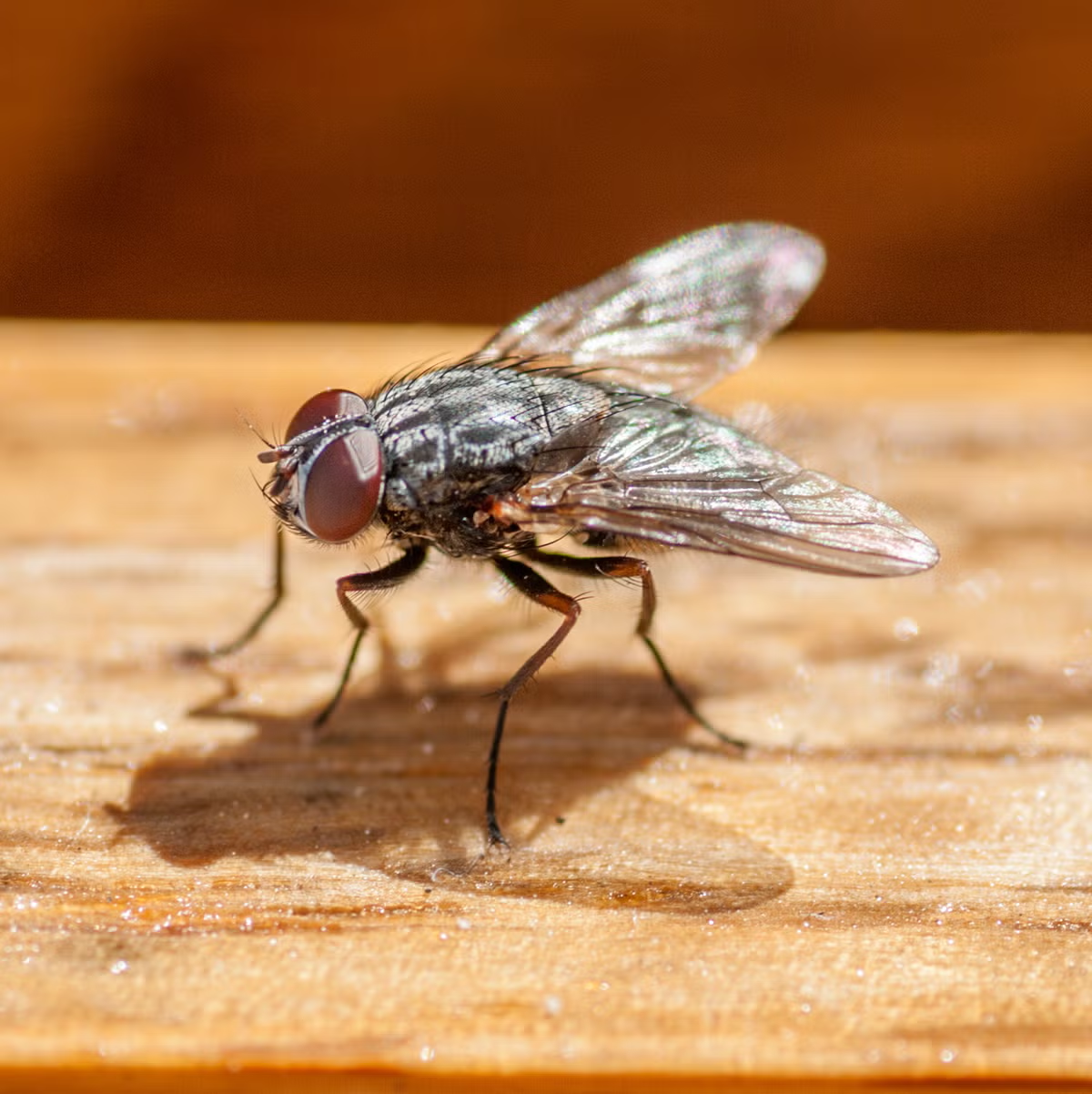
The overwintering invader. Slightly larger and duller than a house fly, with golden hairs on the thorax, a faintly checkered abdomen, and wings that overlap at rest. Notably sluggish.
House Fly
Smaller, faster, and marked with four dark stripes on the thorax. Breeds in waste and decaying material, which is why sanitation works on house flies and not on cluster flies.
Blow or Bottle Fly
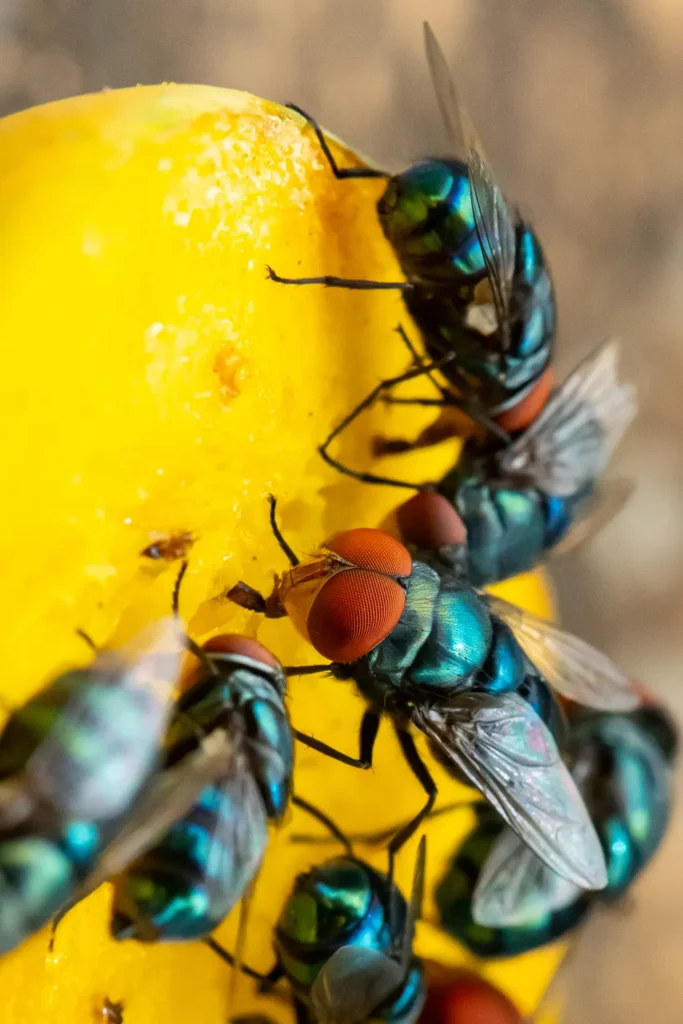
Unmistakably metallic blue or green. Associated with decaying organic matter, so a sudden indoor appearance usually points to a specific source that needs locating.
Face Fly
Similar to a house fly and associated with livestock and pasture. Like cluster flies, it also overwinters inside buildings, so the two are often found together in rural areas.
Our Cluster Fly Control Process
Smith IPM uses Integrated Pest Management (IPM) — a smarter, more effective way to control pests while minimizing environmental impact.
With cluster flies, that means working on the building envelope and the timing of the fall movement period, rather than treating indoors after the fact.
1. Thorough Inspection
We start with a detailed inspection of your property to identify:
- Exterior walls, siding transitions, and rooflines
- Windows, doors, soffits, and eaves
- Utility penetrations and other exterior access points
- Rooms and windows where flies repeatedly appear
2. Targeted Treatment
Based on our findings, we apply precise treatments that may include:
- Preventive exterior perimeter application in late summer
- Focused treatment of south- and west-facing walls
- Crack and crevice treatment at confirmed access points
3. Prevention & Exclusion
Cluster flies use small openings to reach protected areas, so we identify what needs attention:
- Access points and conditions worth addressing
- Screen, vent, and weatherproofing recommendations
- Landscaping and exterior lighting adjustments
Clear scope: Smith IPM identifies access areas but does not perform structural sealing or repair work. Fall invader service is carried out from the exterior and accessible living areas — it does not include entering or treating attic spaces.
4. Ongoing Protection
Cluster flies return on a predictable annual cycle, driven by the earthworm population in the surrounding soil rather than anything you can remove. That makes them well suited to scheduled service, so we offer quarterly pest control services timed to intercept each fall movement period before it starts.
Residential Cluster Fly Control in Lafayette
Cluster flies have a way of undermining confidence in an otherwise clean home. They appear at the same upstairs windows every February, and no amount of tidying makes any difference. Because the source was never indoors.
We work with homeowners across Lafayette and the surrounding areas to provide:
Because cluster flies don’t breed or feed indoors, there’s no need for heavy interior chemical use. We keep treatment on the outside of your home wherever possible, which is both more effective and avoids flies dying in places where they accumulate.
With Smith IPM, you’re not just getting a service; you’re getting a local partner who cares about your home.
Commercial Cluster Fly Control for Businesses
In a business setting, cluster flies read as a hygiene problem even though they aren’t one. Customers see flies on the glass at the entrance and draw their own conclusions.
Whether you run a restaurant, retail store, warehouse, or office, cluster fly activity can:
- Damage your reputation
- Lead to failed inspections
- Suggest a hygiene issue that isn't there
- Impact customer experience
Smith IPM provides custom commercial cluster fly control programs designed to protect your business and keep you compliant.
- Customized treatment plans based on your industry
- Ongoing monitoring and prevention
- Documentation for inspections and audits
- Discreet, professional service
We understand how important it is to protect your brand. Our proactive approach stops cluster flies before they become a problem.
Why Choose Smith IPM for Cluster Fly Control?
There are plenty of pest control companies out there, but not all of them take the same approach.
Here’s what sets Smith IPM apart:
Local & Owner-Operated
Based in Lafayette and run by owner-operator Jeromy Smith. Not a national chain — your neighbors.
Correct Fly Identification
We confirm which fly you actually have first, because house fly methods don't work on cluster flies.
Prevention-First Approach
We look at how flies reach shelter instead of spraying the same walls year after year.
QualityPro Certified
Certified through the industry's QualityPro program, and a member of the NPMA and IPMA.
Reliable & Responsive
When you call, you're talking to a real local team that cares about solving your problem quickly.
Clear About Scope
We tell you plainly what we do and don't do — including that we don't seal, repair, or enter attic spaces.
Signs You Need Professional Cluster Fly Control
Not sure whether it’s time to call a professional? These are the common signs:
- Flies appearing at windows on warm winter or early spring days
- Slow, dull flies crawling on glass rather than flying around the room
- Dark spotting building up on window frames, sills, or walls
- The same rooms affected at the same time every year
- Flies collecting in light fixtures and around blinds
- Cleaning and fly sprays making no lasting difference
DIY vs Professional Cluster Fly Control
With cluster flies, the usual DIY tools are aimed at the wrong target — there’s no indoor breeding source for cleaning or baits to remove.
DIY approaches often:
- Rely on sanitation and baits, which cluster flies don't respond to
- Address only the flies you can see, not those in wall voids
- Leave flies dead inside voids where they attract other insects
- Get applied too late in the season to prevent entry
Professional cluster fly control focuses on:
- Confirming the fly species before anything is treated
- Inspecting the structure to find how flies are getting in
- Treating the exterior at the right point in the season
- Reducing next year's numbers, not just this week's flies
That’s the difference between a quick fix and long-term protection.
Year-Round Protection from Cluster Flies
Cluster flies follow a predictable annual cycle — developing in soil through the growing season, sheltered indoors through winter, active again at the first warm days.
Our annual pest management programs are built around that timing to:
Protect your home or business year-round
Time treatments to the fall movement period
Provide routine inspections and treatments
Give you ongoing peace of mind
Serving Lafayette & Surrounding Areas
Smith IPM provides lady beetle and fall-invader pest management throughout:
Lafayette, IN
West Lafayette
Tippecanoe County
Dayton
Battle Ground
Shadeland
Buck Creek
Monitor
Americus
Romney
Clarks Hill
Stockwell
Nearby communities
As a local company in an Indiana agricultural region, we see first-hand why cluster fly pressure here runs higher than in more urban areas — the surrounding soil supports exactly the earthworm populations these flies depend on.
Get a Free Cluster Fly Control Estimate Today
If cluster flies were a problem over the last year, they’ll almost certainly be back — unless something changes before then.
Smith IPM makes pest control simple, effective, and stress-free for Lafayette-area homes and businesses.
FAQs
When is the best time to schedule cluster fly control in Indiana?
Late summer through early fall, before cluster flies move indoors. Once flies have settled into wall voids and other sheltered spaces, the available options are more limited. Booking an inspection ahead of the fall movement period gives you the widest range of treatment choices.
Why do cluster flies keep getting into my Lafayette home every fall?
Because your building offers easy access to sheltered space, and the surrounding ground supports the population that produces them. Cluster fly larvae develop in soil as parasites of earthworms, so properties bordering lawns, pasture, or open fields tend to see the heaviest pressure. Adults gather on warm south- and west-facing walls in September and October, then move in through small gaps around windows, doors, siding, soffits, and utility penetrations. Nothing about that changes year to year unless the access areas are addressed.
What is the difference between cluster flies and house flies?
They look similar at a glance but behave completely differently. Cluster flies are slightly larger and duller, with golden hairs on the thorax and wings that overlap when at rest, and they move slowly, often crawling on window glass. House flies are faster, have four dark stripes on the thorax, and breed in waste and decaying material. The distinction matters because house fly methods, sanitation and baiting, do not work on cluster flies.
Are cluster flies harmful, or do they spread disease?
Cluster flies are a nuisance pest rather than a health pest. They do not bite, they do not feed or breed indoors, and they are not associated with waste or the disease transmission linked to filth flies. The practical problems are large numbers appearing at windows, dark spotting on walls and window frames, and dead flies accumulating in voids, which can in turn attract secondary insects that feed on them.
Will cleaning up or using fly baits get rid of cluster flies?
No, and this is the most common wasted effort with this pest. Because cluster fly larvae develop in soil outside as parasites of earthworms, there is nothing indoors for sanitation to remove and nothing for a bait to attract. Treating the lawn is not practical either. Effective control focuses on the building envelope: where flies are gathering, how they are getting in, and correctly timed exterior work.
How much does cluster fly control cost in Lafayette?
Smith IPM does not quote a single flat price, because cost depends on the size and construction of the building, how much activity is present, how accessible the affected areas are, and whether you want one-time seasonal service or an annual program. The free 30-minute assessment gives you a specific figure for your property before you commit.
Does Smith IPM seal the gaps where cluster flies get in?
No. Smith IPM does not perform structural sealing or home repair work. During an inspection we identify likely access areas and conditions that deserve attention, and the homeowner, property manager, or an appropriate contractor completes any sealing or repair work. Fall invader service is carried out from the exterior and accessible living areas and does not include entering or treating attic spaces.
Can you find where cluster flies are getting into my home?
Yes. Locating access areas is the core of our inspection. A technician evaluates exterior walls, siding transitions and rooflines, windows, doors, soffits and eaves, and utility penetrations, then cross-references that against the rooms and windows where you have been seeing flies. You receive a clear explanation of where flies are most likely getting in and what deserves attention. Note that Smith IPM identifies these areas but does not carry out the sealing or repair work itself.
Should I just spray cluster flies inside myself instead?
Indoor spraying is rarely a complete solution. Aerosol products may kill the flies you can see but do not stop others sheltering in wall voids from emerging later, and flies killed inside voids can accumulate and attract secondary insects such as larder and carpet beetles. That is why our approach starts with an inspection and correctly timed exterior work rather than indoor treatment.
What should I do about the cluster flies already inside right now?
Remove them physically rather than spraying. A vacuum handles them easily because they are slow-moving, and they do not stain the way lady beetles do. Empty the vacuum outdoors so dead flies are not left inside the building. Make a note of which rooms and windows they appear at, since that helps a technician narrow down access areas during an inspection. Removing the flies you can see manages the symptom; it does not change how they are getting in.
Do you treat commercial properties for cluster flies?
Yes. Smith IPM provides commercial cluster fly and fall-invader programs for restaurants, retail, offices, warehouses, and managed properties, including customized treatment plans, ongoing monitoring, and documentation for inspections and audits.
What areas do you serve, and what happens during the free assessment?
Smith IPM serves Lafayette, West Lafayette, and Tippecanoe County, Indiana, along with Dayton, Battle Ground, Shadeland, Buck Creek, Monitor, Americus, Romney, Clarks Hill, Stockwell, and nearby communities. During the free 30-minute assessment a technician inspects the exterior and affected interior areas, evaluates where activity is occurring and how flies are likely reaching sheltered space, then explains the recommended approach, timing, and cost. There is no obligation to book service.