
Heat vs. Chemical Bed Bug Treatment: Which Is Better for Lafayette Homes?

Professional heat treatment can kill bed bugs and eggs when the needed temperature reaches their hiding places for enough time. Chemical treatment can provide targeted control and, depending on the product used, may continue working after application. In many cases, an integrated approach can offer advantages over relying on one method alone. The U.S. Environmental Protection Agency recommends an Integrated Pest Management, or IPM, approach for bed bugs. This can include inspection, heat, monitoring, cleaning, physical control methods, and properly selected pesticides when appropriate. If you are looking for a bed bug exterminator in Lafayette, ask how the infestation will be inspected and treated rather than choosing a service based only on the words “heat” or “chemical.” Bed bugs can hide in mattress seams, bed frames, furniture joints, baseboards, cracks, and other small spaces. The EPA notes that they can hide in cracks about the width of a credit card. Because every infestation is different, the best treatment plan depends on the extent of activity, hiding areas, room contents, treatment preparation, safety needs, and follow-up. What Is the Main Difference Between Heat and Chemical Bed Bug Treatment? The main difference is how the treatment kills or controls bed bugs. Heat raises temperatures within a treatment area to levels that can kill bed bugs at different life stages. Chemical treatment uses pesticides labeled for bed bug control. Depending on the product and application method, these treatments may target bed bugs in cracks, crevices, furniture, and other approved locations. Here is a simple comparison: Factor Heat Treatment Chemical Treatment Main approach Uses controlled high temperatures Uses approved pesticides Bed bug eggs Can kill eggs when lethal heat reaches them Effect varies by product and application Treatment speed Can affect exposed and hidden bugs during treatment May work immediately or over time Residual effect Generally no residual protection Some products may leave residual activity Preparation Often requires detailed preparation Preparation varies by treatment plan Sensitive belongings Some items may need removal Product label determines treatment areas Follow-up Monitoring remains important Repeat visits may be needed Best use Depends on infestation and property Depends on infestation and property This is why homeowners should be cautious of anyone who says one method is always the right answer before inspecting the property. How Does Heat Treatment Kill Bed Bugs? Professional heat treatment raises the temperature of an infested room or structure using specialized equipment. Bed bugs cannot survive sustained exposure to sufficiently high temperatures. The EPA states that bed bugs die when their body temperature reaches about 113°F, or 45°C. However, simply making a room 113°F does not mean every bed bug will die. The surrounding treatment area must become hotter so that lethal heat reaches bugs hidden inside furniture, cracks, and other protected areas. EPA IPM guidance also notes that heating infested articles or areas to at least 120°F, about 49°C, for 90 minutes can kill eggs when the needed temperature reaches them. What Are the Advantages of Heat Treatment? Heat has several useful features. Heat Can Reach Many Hiding Areas Bed bugs hide in very small spaces. When professionals manage temperatures correctly, heat can move through a room and penetrate many areas that are difficult to treat individually. This can make heat useful when bugs are spread through furniture, beds, and other parts of a room. Heat Can Kill Bed Bug Eggs Eggs can make bed bug control difficult. Properly performed heat treatment can kill both active bed bugs and eggs when the required temperature reaches the hiding area for enough time. That is one reason heat is commonly considered for established infestations. Heat Reduces Dependence on Pesticides Heat provides a non-chemical control method. That does not automatically make it the correct option for every house, but it may be useful as part of a broader pest management plan. What Are the Limits of Heat Treatment? Heat has important limitations. The biggest one is that heat normally provides no residual protection after treatment. The EPA specifically warns that practices should be in place to prevent bed bugs from being introduced again because heat treatments do not leave residual effects. That means a successful heat treatment today cannot prevent someone from carrying another bed bug into the home later. Heat-sensitive belongings can also require special handling. Items that may be affected by high temperatures must be identified before treatment. Preparation instructions should always be followed carefully. How Does Chemical Bed Bug Treatment Work? Chemical bed bug treatment uses pesticide products registered for bed bug control. The EPA reports that more than 300 pesticide products are registered for use against bed bugs, across several chemical classes. These include: Different products work in different ways. A pest professional may select products according to the location, infestation level, bed bug behavior, label directions, and concerns about resistance. What Are the Advantages of Chemical Treatment? Chemical treatments offer several potential benefits when used correctly. Some Treatments Provide Residual Activity Unlike heat, some properly applied pesticides can remain active on approved surfaces after treatment. This can help expose bed bugs that leave protected hiding areas later. The exact duration and effect depend on the product, surface, application, and label instructions. Treatment Can Be Highly Targeted Professionals may treat specific cracks, crevices, furniture areas, baseboards, bed frames, or other approved locations where bed bugs are likely to hide. Targeted treatment can be useful when an inspection identifies clear activity zones. Different Modes of Action Are Available Bed bugs have developed resistance to some pesticides. The EPA notes that using pesticides with different modes of action may help reduce the likelihood of resistance becoming a treatment problem. This is one reason professional product selection matters. What Are the Limits of Chemical Treatment? Chemical treatment is not simply a matter of spraying a room. A pesticide treatment may fail when: The EPA identifies missed hiding areas, poor preparation, untreated nearby areas, and incorrect pesticide use among the reasons bed bug treatments may fail. For this reason, repeated random spraying is not a
Why Do Mice Get Into Lafayette Homes in the Fall? Common Entry Areas to Check

Fall brings cooler evenings, changing leaves, and more time indoors across Lafayette, Indiana. It can also bring an unwanted visitor into homes: mice. Why do mice get into Lafayette homes in the fall? As outdoor conditions change, mice look for places that provide reliable food, water, shelter, and protection. A heated home, garage, basement, crawl space, or attic can provide those things. If a building has even a small opening, mice may find a way inside. The Centers for Disease Control and Prevention states that mice can fit through a hole about 1/4 inch wide, roughly the width of a pencil. That means openings around pipes, garage doors, foundations, siding, vents, and utility lines may be large enough for a mouse to use. If you are searching for mouse control Lafayette, IN, it helps to understand that finding a mouse is only part of the problem. You also need to understand where mice may be entering and what is making the property attractive to them. Common fall entry areas include: Checking these areas before cold weather settles in can help you identify conditions that may allow mice to enter. Why Do Mice Enter Homes More Often in the Fall? Mice need the same basic things throughout the year: food, water, shelter, and places to nest. During warmer months, mice can find many of these resources outdoors. They may live near fields, brush, landscaping, sheds, woodpiles, garages, gardens, or other protected areas. As fall progresses in Indiana, outdoor conditions begin to change. Temperatures drop. Natural food sources can change. Vegetation begins to die back. Buildings can become more attractive because they offer stable shelter. A house mouse is well adapted to living around people. Purdue Extension notes that house mice live in and around homes, farms, commercial buildings, and open fields. They can also reproduce throughout the year when conditions are favorable. A mouse does not know that your house is a house. It simply identifies a protected environment that may provide what it needs. Does Cold Weather Force Every Mouse Indoors? No. Not every outdoor mouse will enter a house when temperatures fall. Many mice continue living outdoors or in other protected environments. However, fall can increase the chance that mice explore garages, sheds, crawl spaces, basements, attics, and wall voids. Homes that provide easy access are more vulnerable than buildings with fewer openings. This is why prevention should focus on the structure and surrounding property rather than assuming cold weather alone causes the problem. How Small of a Gap Can a Mouse Get Through? A mouse can squeeze through an opening about 1/4 inch in diameter, according to the CDC. That fact changes how homeowners should inspect a property. A hole does not need to look large enough for an animal. Small construction gaps, damaged materials, missing weather stripping, and openings where utilities pass through walls may deserve attention. When inspecting your home, think small. A gap that seems unimportant to you may still provide enough room for a mouse. Area to Check What to Look For Why It Matters Exterior doors Light beneath doors, worn sweeps, corner gaps Ground-level access can provide an easy route Garage doors Gaps along bottom corners or damaged seals Garages often connect to the house Utility lines Open space around pipes, wires, or cables Penetrations create direct openings through walls Foundation Cracks, damaged vents, construction gaps Mice often travel close to walls and foundations Attic vents Damaged screens or open gaps Upper areas can provide protected nesting space Roofline Gaps around soffits, fascia, and eaves Mice can climb and explore elevated openings Crawl space Damaged vents or access doors Quiet, protected areas can support rodent activity What Are the Most Common Mouse Entry Areas to Check? A good fall inspection should cover the entire exterior of the house, not only the place where you saw a mouse indoors. The mouse you notice in the kitchen may have entered the structure somewhere completely different. 1. Exterior Doors and Door Sweeps Start with doors leading outside. Stand inside during daylight and look around the edges of the closed door. If you can see daylight underneath or around the door, inspect that area closely. Pay special attention to: Exterior doors that receive heavy use may develop small gaps over time. 2. Garage Doors Garages deserve extra attention in the fall. A garage door has a large perimeter, moving components, and seals that wear down with age. The bottom corners can be especially vulnerable. Once a mouse enters a garage, it may find another opening that leads farther into the home. Check around: Reducing available food is just as important as identifying possible entry points. 3. Plumbing and Utility Penetrations Homes need openings for water pipes, electrical lines, cable connections, gas lines, air-conditioning equipment, and other utilities. The CDC specifically recommends inspecting areas around electrical, plumbing, cable, gas, sewer, and other utility lines. Walk around the outside of your house and look carefully where these systems enter. Also check indoors: An opening around a pipe may connect directly to a wall void where mice can move without being seen. 4. Foundation Gaps and Cracks Inspect the area where your foundation meets siding, brick, doors, windows, and utility penetrations. You are looking for more than large cracks. Check for: The CDC recommends checking the area between the foundation and the ground as part of rodent prevention. Older Lafayette homes can have many additions, repairs, utility upgrades, or changes made over time. Each transition between materials deserves a closer look. 5. Crawl Space Openings Crawl spaces can be attractive to mice because they are quiet and protected. Inspect crawl space doors and vents for damage. Look for loose covers, damaged screens, gaps around frames, and openings near plumbing or utility lines. Do not assume a crawl space problem will stay beneath the house. Wall cavities and utility pathways can allow rodents to move into other parts of the structure. 6. Attic Vents, Eaves, and Soffits Homeowners often focus
Why Stink Bugs Enter Lafayette Homes in the Fall and What to Do

If you keep finding stink bugs inside your Lafayette home in the fall, they are most likely looking for a protected place to spend the winter. The brown marmorated stink bug is an invasive insect that gathers on buildings as temperatures begin to fall, then moves through small gaps around windows, doors, siding, utility lines, roof areas, and other openings. The good news is that stink bugs usually do not reproduce inside your home, bite people, or damage the structure. Their main indoor problem is nuisance activity. They may gather in hidden spaces, appear near windows on warm days, and release their familiar odor when disturbed or crushed. Purdue Extension reports that the brown marmorated stink bug was first confirmed in Indiana in 2010. Penn State Extension notes that adults begin looking for overwintering sites around September and October. That timing explains why Lafayette homeowners often notice them as summer ends and cooler fall weather arrives. If you are searching for Pest Control in Lafayette because stink bugs seem to appear every fall, the most useful strategy is to understand why they are entering, remove the insects already indoors carefully, and identify areas around the home that may allow future entry. A few stink bugs do not always mean you have a serious pest problem. Repeated activity or large numbers, however, may be a sign that your home provides easy access to protected overwintering areas. Why Do Stink Bugs Enter Lafayette Homes in the Fall? Stink bugs enter homes in fall because they are searching for protected places to survive colder weather. Brown marmorated stink bugs spend spring and summer outdoors feeding on plants. As temperatures and daylight conditions change in late summer and fall, adults begin searching for sheltered overwintering sites. Homes provide many of the conditions they want: Penn State Extension says brown marmorated stink bugs commonly gather on the outside of homes on warm fall days as they search for overwintering sites. This is why a homeowner may see dozens on the sunny side of a building even though there were few obvious stink bugs indoors during summer. They are not necessarily attracted because your house is dirty or poorly maintained. A clean home can still provide access to protected spaces. What Kind of Stink Bug Is Most Likely Entering My Home? The brown marmorated stink bug, or Halyomorpha halys, is one of the most common stink bugs associated with fall home invasions. Adults are usually: Purdue Extension explains that Indiana has several stink bug species, but the brown marmorated stink bug is especially important because of its habit of entering homes in fall. Quick Stink Bug Facts Fact What Homeowners Should Know Scientific name Halyomorpha halys Common indoor season Fall and winter First confirmed in Indiana 2010 Typical adult size About 1/2 inch Indoor reproduction Generally no Structural damage Not expected Main indoor concern Nuisance activity and odor Why they enter To find protected overwintering sites Correct identification matters because not every shield-shaped insect is a brown marmorated stink bug. How Are Stink Bugs Getting Into My House? Stink bugs can use surprisingly small gaps around the exterior of a building. Potential access areas include: Penn State Extension recommends mechanical exclusion as the best method for reducing stink bug entry and specifically identifies gaps around windows, doors, siding, utility pipes, chimneys, and fascia as areas worth checking. This does not mean every opening should be handled without considering ventilation, drainage, or building design. Some openings serve an important purpose. If you identify damaged materials or gaps that appear to require repair or sealing, those improvements should be completed by the homeowner or an appropriate qualified contractor. Smith IPM can help identify pest-related areas that may need attention, but it does not perform structural sealing or home repair work. Why Do I See Stink Bugs Around Windows? Windows are one of the most common places homeowners notice overwintering insects. There are two reasons. First, small gaps around window frames and screens may provide access. Second, stink bugs that are already inside wall spaces may become active when indoor temperatures rise or sunlight warms part of the building. They often move toward light, which can bring them to windows. University of Minnesota Extension notes that stink bugs remain mostly inactive during winter but can become visible on warm days or when indoor heating causes them to become active. So finding one at a window in January does not necessarily mean it entered the house that day. It may have been hidden inside the structure since fall. Are Stink Bugs Dangerous to People or Pets? Brown marmorated stink bugs are mainly nuisance pests indoors. They do not normally: Penn State Extension states that brown marmorated stink bugs do not reproduce inside structures or damage the building. Their best-known defense is their odor. When disturbed or crushed, stink bugs release chemicals that can produce a strong smell. This defense helps explain their common name. For most homeowners, the unpleasant smell and repeated indoor sightings are the biggest concerns. Do Stink Bugs Lay Eggs Inside the House? Usually, no. Brown marmorated stink bugs enter homes to overwinter, not to establish an active indoor breeding population. During winter they generally remain inactive in protected spaces. University of Minnesota Extension states that overwintering brown marmorated stink bugs do not lay eggs, reproduce, damage the home, or bite while spending the winter indoors. They normally return outdoors when temperatures rise. This is an important distinction because finding several stink bugs inside does not necessarily mean you have an indoor nest or breeding colony. The source of the problem is often the number of insects that entered the structure during fall. Why Do Stink Bugs Seem to Appear Suddenly? Many homeowners feel as if stink bugs suddenly appeared overnight. In reality, the insects may have been gathering outdoors for days or weeks. Common conditions that make activity more noticeable include: Oregon State University Extension notes that brown marmorated stink bugs often gather on warm,
Why Mosquito Control Is Important for Lafayette Families

Mosquito control matters for Lafayette families because mosquitoes are more than an outdoor annoyance. They can make yards, patios, gardens, and play areas difficult to enjoy. Some mosquito species can also spread disease. Reducing mosquito breeding areas and limiting bites can help families spend more time outside with greater comfort and peace of mind. For homeowners searching for Mosquito Control in Lafayette, the most useful approach starts with prevention. That means finding places where mosquitoes can breed, reducing standing water, protecting family members from bites, and using targeted control methods when conditions call for them. The Centers for Disease Control and Prevention reports that more than 200 types of mosquitoes live in the United States and U.S. territories. About 12 types can spread germs. (CDC) In Indiana, the Indiana Department of Health identifies West Nile virus as the most commonly reported mosquito-borne disease in the state. It is primarily spread in Indiana by Culex mosquitoes. This does not mean every mosquito is carrying disease. Most mosquitoes are simply nuisance pests. It does mean that reducing mosquito exposure is a sensible part of protecting your family and making your property more comfortable. Effective mosquito management is not about trying to eliminate every mosquito. It is about reducing breeding conditions, limiting mosquito populations around the property, and lowering the chance of bites. Why Is Mosquito Control Important for Lafayette Families? Mosquito control supports both health and everyday quality of life. A backyard should be a place where children can play, families can eat outside, and friends can gather. Heavy mosquito activity can quickly change how people use those spaces. For example, imagine a Lafayette family with a shaded patio, several flowerpots, a children’s play area, and gutters that hold small amounts of rainwater. Each feature seems harmless on its own. Together, they may create several places where mosquitoes can develop or rest. Mosquito management helps address those conditions before mosquito pressure becomes harder to manage. The main benefits include: Mosquito control works best when homeowners understand what is happening around their property instead of treating every mosquito problem the same way. What Health Risks Are Connected With Mosquitoes in Indiana? One of the most important reasons to take mosquitoes seriously in Indiana is West Nile virus. The Indiana Department of Health states that West Nile virus is the most commonly reported mosquito-borne disease in Indiana. Most infected people do not develop symptoms, but a small number can develop serious illness involving the nervous system. According to Indiana health officials: West Nile virus outcome Approximate share No symptoms About 80% Fever or other symptoms About 20% Severe nervous system illness Less than 1% People over age 60 and people with weakened immune systems or certain medical conditions face a greater risk of severe illness. CDC also notes that there is currently no licensed vaccine or medicine that prevents West Nile virus disease in people. Preventing mosquito bites remains the main way to reduce personal risk. These facts should encourage practical prevention, not fear. Most mosquito bites do not result in West Nile virus. Still, families can take reasonable steps to reduce mosquito exposure. Why Do Lafayette Yards Attract Mosquitoes? Mosquito activity often starts with water. Mosquitoes need water during important parts of their life cycle. The EPA recommends checking properties for standing water because containers and other water-holding areas can become mosquito habitat. Common sources include: Some of these areas are obvious. Others are easy to miss. A flowerpot tray may hold only a small amount of water. A toy left behind a shed may fill after a storm. Leaves can collect in gutters and slow drainage. A container hidden behind shrubs can remain unnoticed for weeks. This is why mosquito prevention should include a regular property check, especially after rain. Homeowners who want a deeper look at these conditions can read what attracts mosquitoes to your Lafayette yard in the related resources section below. How Does Standing Water Affect Mosquito Problems? Standing water gives mosquitoes an opportunity to complete the early stages of their life cycle. EPA guidance recommends eliminating standing water from items such as gutters, buckets, tires, toys, and plastic covers. The agency also recommends changing water in items such as bird baths and plant trays at least weekly. For Lafayette families, a simple weekly routine can make a real difference. Walk around the property and: The goal is not to create a perfectly dry yard. That is unrealistic. The goal is to remove avoidable breeding opportunities. What Is Integrated Mosquito Management? Integrated mosquito management uses several methods together instead of depending on one treatment. The EPA and CDC support Integrated Pest Management, or IPM, as a science-based approach that focuses on prevention, monitoring, habitat reduction, and appropriate control methods. A mosquito-focused IPM plan may include: This matters because spraying adult mosquitoes alone does not address every stage of the mosquito life cycle. EPA guidance notes that controlling immature mosquitoes before they become adults can play an important role in mosquito management. Homeowners interested in the broader prevention philosophy can learn more about how Integrated Pest Management works. How Can Mosquito Control Make Outdoor Spaces More Comfortable? Health concerns matter, but comfort is another major reason families seek mosquito help. Frequent bites may cause people to avoid areas they would normally enjoy. Kids may spend less time playing outside. Parents may move meals indoors. Homeowners may stop using patios in the evening. Reducing mosquito pressure can help families use these areas more comfortably: No mosquito service can promise a completely mosquito-free yard. Mosquitoes can move between properties, and weather conditions constantly change. A better goal is meaningful mosquito reduction combined with ongoing prevention. That expectation is more realistic and more useful for homeowners. When Should Lafayette Homeowners Start Mosquito Prevention? Do not wait until mosquitoes become overwhelming. Mosquito management works best when families begin checking breeding conditions as the weather warms and continue through periods of mosquito activity. Rain also matters. After storms, new water-holding areas can appear quickly.
Top Signs of a Termite Infestation in Lafayette Homes

The clearest signs of a termite infestation in a Lafayette home are winged termites indoors, piles of discarded wings, mud tubes on foundation walls, hollow or soft wood, muddy galleries inside damaged lumber, and live pale termites found when a tube or board is disturbed. Blistered paint, swollen wood, or loose trim can also raise concern, but those changes may come from moisture or normal house movement. A trained inspection is the best way to confirm the cause. Termites often stay hidden in soil, wood, wall spaces, and shelter tubes. The U.S. Environmental Protection Agency says many people do not know they have termites until they see a swarm or discover damage during construction. The agency also reports that termites cause billions of dollars in structural damage each year and that property owners spend more than $2 billion on treatment. Discarded wings, mud tubes, or dirt-like lines along a basement wall may point to termite activity. Before arranging termite inspection in Lafayette, take time to confirm what you have found. Photograph the evidence, collect a few insects or wings in a sealed container, and record the exact location. Avoid opening walls or spraying visible insects, since this may disturb the evidence without addressing the colony. Indoor swarmers, active mud tubes, or several signs in the same area should be inspected by a qualified professional. There is no need to panic, however. Purdue Extension explains that termites cause damage slowly, giving homeowners time to compare licensed providers, review treatment options, and choose an appropriate plan. Termite Signs at a Glance Possible sign Where you may find it What it may mean Best next step Winged termites indoors Windows, doors, lights, basement A colony may be in or under the structure Save a sample and schedule an inspection Discarded equal-length wings Windowsills, floors, spider webs A recent termite swarm occurred nearby Photograph and collect a few wings Mud tubes Foundation, crawl space, piers, joists Subterranean termites created a protected route Leave most evidence intact for inspection Hollow or soft wood Sill plates, joists, trim, flooring Feeding may have removed wood from within Probe gently and avoid structural damage Muddy galleries in wood Broken trim, exposed framing, repairs Subterranean termite damage is possible Stop covering the area and document it Pale workers or soldiers Inside a damaged board or opened tube Direct evidence of termite activity Contact a licensed termite professional Water-like surface changes Paint, drywall, flooring, door frames Termites or moisture may be affecting the area Check for leaks and request identification These signs reflect EPA and Purdue guidance on swarms, hollow wood, mud tubes, and hidden feeding. Why Are Termites So Hard to Find? Subterranean termites need food and moisture. They stay in soil, wood, or mud tubes that shield them from dry air and light. They may enter through wood near soil, foundation cracks, slab joints, or gaps around utility lines. A roof or pipe leak can also support hidden activity. Worker termites cause wood damage. They can eat soft wood layers while leaving a thin outer shell. A board may look sound until trim comes off or a repair exposes the inside. A clean room does not rule out termites. Which Conditions Raise Risk but Do Not Prove Termites? Some home conditions make termite access or hidden travel more likely. They include damp soil by the foundation, wood that touches soil, blocked crawl space vents, leaking pipes, deep mulch, and firewood against the house. These are risk factors, not proof of a live colony. Use them as a map for your checks. Look closely where a porch post meets soil, where a downspout leaves a wet spot, or where siding sits near the grade. Also check past repair sites and rooms with a leak history. Even a well-kept home can face termites, so good care lowers risk but does not replace a sound inspection. What Are the Top Signs of Termites in a Lafayette Home? 1. Winged Termites Swarming Indoors Winged termites, called swarmers, leave a mature colony to mate. Spring warmth and rain often bring swarms. Purdue Extension treats winged termites inside a building as a major warning because the rest of the colony stays hidden. A swarm by a stump shows termites live nearby. It does not prove the house is infested. Swarmers coming from a basement, wall, window, or floor are more serious. Save a few insects for a clear identification. 2. Piles of Discarded Wings Swarmers shed their wings after a short flight. Small piles may collect near windows, doors, lights, vents, or spider webs. Use these traits for a first check: Feature Termite swarmer Flying ant Antennae Straight or gently drooped Bent or elbowed Waist Broad Narrow or pinched Wings Four wings of about equal length Front wings longer than rear wings Save a sample for a firm identification. 3. Mud Tubes on Foundations or Framing Mud tubes are a strong sign of subterranean termites. They look like thin brown lines on concrete, block, wood, pipes, piers, or crawl space walls. The tubes help termites move between soil and wood while staying moist. Purdue says these tubes are often less than one-quarter inch wide. They may also appear on joists, subfloors, or inside cracks. An empty tube does not prove the colony is gone. Termites may use another route. Take a photo before you touch a tube. Do not scrape away all the evidence. Live termites or a rebuilt spot can point to active use. 4. Wood That Sounds Hollow or Feels Soft Termites may feed inside a board while the face stays intact. Trim, sill plates, joists, and door frames can sound hollow when tapped. A tool may enter damaged wood with little force. Be gentle. Rot and water can also soften wood. Hollow wood plus tubes, wings, or soil in the tunnels is more telling than one weak board. The EPA lists careful probing of exposed wood as a way to find hollow spots. 5. Mud-Lined Tunnels Inside Damaged Wood Subterranean
How to Keep Rodents Out of Your Lafayette Home Year-Round
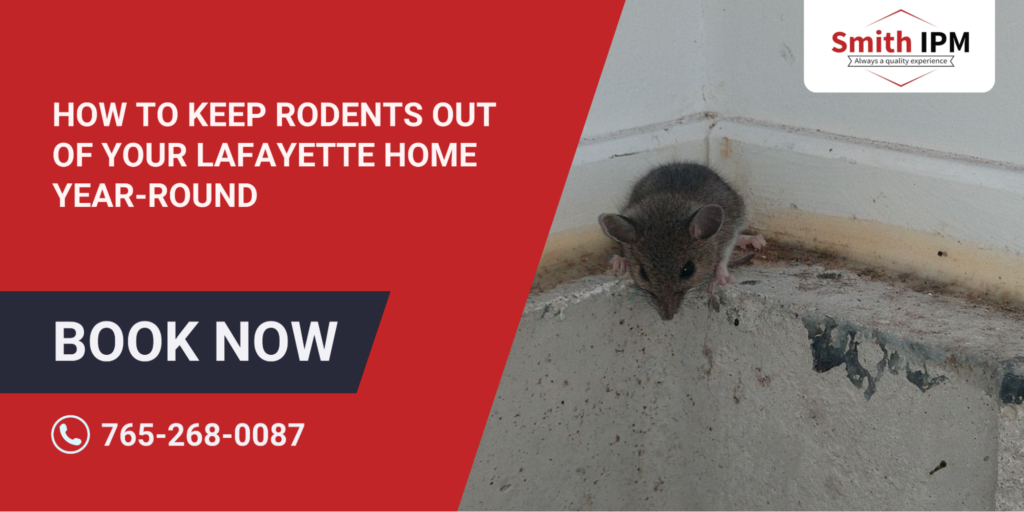
Rodents enter Lafayette homes when they find three things: food, water, and shelter. The best way to keep them out year-round is to remove attractants, identify entry points, maintain your yard, store food safely, and check hidden areas before mice or rats settle inside. Prevention works best when it happens before you hear scratching in the walls or find droppings in the garage. In Lafayette, rodent pressure can change with the seasons. Spring and summer bring more outdoor activity, food sources, and nesting behavior. Fall often pushes mice and rats closer to homes as temperatures drop. Winter can make attics, basements, crawl spaces, and garages more attractive because they offer warmth and protection. Rodents are not just annoying. The CDC states that rodents can spread diseases directly or indirectly, and it is easier to control them before they establish themselves inside a home or building. The CDC also recommends checking for droppings and gnaw marks as signs of rodent activity. The goal is not only to remove rodents after they appear. The stronger approach is to make your home harder to enter and less rewarding to explore. This guide explains how Lafayette homeowners can reduce rodent risk in every season with practical steps, safe habits, and a prevention-first plan. It also helps homeowners understand when professional rodent control in Lafayette may be needed to address active signs and prevent recurring problems. Why Do Rodents Enter Lafayette Homes? Rodents usually enter homes because the property provides easy access to food and water. Mice and rats are resourceful. They can use small gaps, damaged vents, garage door openings, utility lines, and cracks around foundations. Common reasons rodents enter homes include: Lafayette homes may also see more rodent pressure near wooded lots, older neighborhoods, fields, creeks, alleys, commercial dumpsters, and properties with heavy landscaping. Rodents do not need a large opening to become a problem. Once inside, they can nest behind walls, under appliances, in insulation, or inside storage areas. What Are the First Signs of Rodents? Most homeowners do not see a mouse or rat right away. They usually notice evidence first. Look for these warning signs: Sign What It May Mean Small dark droppings Rodents are feeding or traveling nearby Gnaw marks Rodents are chewing wood, plastic, wires, or packaging Scratching noises Activity may be happening in walls, ceilings, or attics Grease marks Rodents may be using the same travel path repeatedly Shredded material Paper, fabric, or insulation may be used for nesting Odor A stale or musky smell may suggest active rodent presence Pet behavior Cats or dogs may stare at walls, cabinets, or appliances If you see fresh droppings, avoid sweeping or vacuuming them dry. The CDC recommends wet cleaning methods and careful cleanup of rodent urine, droppings, dead rodents, and nesting material. How Can Rodents Damage a Home? Rodents can create health, sanitation, and property concerns. They may contaminate stored food, chew insulation, damage drywall, and create odors. They may also chew on electrical wiring, plastic materials, and structural areas. The CDC notes that rodents can carry diseases that spread to people directly or indirectly. The EPA also provides guidance on rodent infestations and the safe use of rodent control products, as these products can pose risks to children, pets, wildlife, and applicators when used incorrectly. For homeowners, this means rodent control should not rely only on random traps or store-bought products. A safer plan starts with inspection, sanitation, exclusion guidance, monitoring, and responsible treatment when needed. How Do You Keep Rodents Out Year-Round? The best way to keep rodents out is to combine preventive measures rather than rely on a single solution. Rodent control works best when the home, yard, storage areas, and food sources are managed together. 1. Store Food in Sealed Containers Rodents can chew through cardboard, thin plastic, and paper packaging. Move pantry foods into sealed plastic, glass, or metal containers. Focus on: Garages and mudrooms are common problem areas because homeowners often store bulk food, pet supplies, and seed there. 2. Keep the Kitchen Clean at Night A few crumbs may not seem like much, but rodents can survive on small food sources. Wipe counters, sweep floors, clean under appliances, and avoid leaving dirty dishes out overnight. Pay close attention to: 3. Manage Pet Food Carefully Pet food is one of the most common rodent attractants. Store bags in sealed bins and avoid leaving bowls out overnight. If pets eat outside, remove leftover food before dark. 4. Secure Trash and Recycling Use trash cans with tight-fitting lids. Keep outdoor bins closed and clean spills around them. If possible, avoid placing trash directly against the house. Rinse food containers before putting them in recycling bins. Grease, sugar, and food residue can attract rodents and other pests. 5. Reduce Yard Clutter Rodents like cover. Tall grass, stacked wood, leaf piles, and dense shrubs give them places to hide. Keep your yard less attractive by: 6. Inspect Garage Doors Garage door corners often leave small gaps. Weather stripping can wear down over time. Check the bottom seal and side gaps regularly. Inside the garage, use sealed bins instead of cardboard boxes. Rodents often nest in quiet corners where clutter stays untouched for months. 7. Check Utility Openings Pipes, cables, HVAC lines, and exterior wall penetrations can leave gaps. These areas should be inspected during seasonal maintenance. Smith IPM does not seal homes, but homeowners can use inspections to identify areas that may need attention from the right repair professional. 8. Control Moisture Rodents need water. Fix leaks, clean gutters, and reduce standing water near the foundation. Crawl spaces and basements should stay as dry as possible. Moisture also attracts insects, which can create a broader pest problem. 9. Monitor Attics and Crawl Spaces Attics and crawl spaces are quiet, dark, and rarely checked. That makes them attractive nesting areas. Inspect these spaces for: Do not enter unsafe areas without proper protection. If you find heavy droppings or nesting material, follow safe cleanup guidance or contact
Common Places Wasps Build Nests Around Lafayette Homes

Wasps often build nests around Lafayette homes in protected spaces that offer shelter from wind, rain, and regular disturbance. The most common places include roof eaves, porch ceilings, deck railings, attic vents, wall voids, trees, shrubs, sheds, garages, fence posts, and underground cavities. Some nests are easy to see, while others stay hidden until wasps become active near doors, windows, patios, or walkways. In Lafayette, wasp activity usually increases during the warmer months. The CDC notes that bees, wasps, and hornets are most abundant in warm weather, and nests may be found in trees, under roof eaves, or on equipment such as ladders. That matters for homeowners because many nest sites are close to areas people use every day, such as porches, decks, gardens, garages, and entryways. Not every wasp nest creates the same level of concern. A small paper wasp nest under a far corner of a shed may be less urgent than a yellowjacket nest near a front door or inside a wall void. The safest response depends on the wasp species, nest location, nest size, and how close the activity is to people, pets, and high-traffic areas. This guide explains where wasps commonly build nests around Lafayette homes, how to spot early activity, why some nests are harder to handle, and when professional wasp nest removal in Lafayette may be the safer option for nests near doors, patios, walkways, or other high-use areas. Why Do Wasps Build Nests Around Homes? Wasps choose nest sites based on shelter, access, and nearby food sources. Homes offer many protected areas that look ideal from a wasp’s perspective. Common attractants include: Wasps also benefit from human structures because many areas stay dry and protected. A porch ceiling, shed overhang, or wall cavity can provide a stable space for nest growth through the season. For homeowners, the issue is location. A nest far from daily activity may not cause immediate conflict. A nest near a doorway, children’s play area, mailbox, grill, or patio can quickly become a safety concern. What Types of Wasps Nest Around Lafayette Homes? Several stinging insects may nest around homes in Indiana. Homeowners often use the word “wasp” to refer to paper wasps, yellowjackets, hornets, and similar insects. Identifying the type matters because nest habits and behavior can vary. Wasp Type Common Nest Location Nest Style Homeowner Concern Paper wasps Eaves, porch ceilings, railings Open comb, umbrella-like Often near doors, decks, and sheds Yellowjackets Ground cavities, wall voids, attics Hidden enclosed nest Can be defensive near nest openings Bald-faced hornets Trees, shrubs, and building overhangs Large enclosed paper nest A nest may hold many workers Solitary wasps Soil, small holes, and landscape areas Individual nests Usually less aggressive than social wasps The University of Minnesota Extension notes that yellowjacket nests may be found in wall voids, attics, concrete blocks, hollow logs, landscape timbers, and similar spaces. It also states that hidden nests in buildings are usually best controlled by a pest management professional. Where Do Wasps Commonly Build Nests Around Lafayette Homes? 1. Roof Eaves and Overhangs Roof eaves are among the most common nesting sites for wasps. They offer shade, dryness, and protection from rain. Paper wasps often attach open-comb nests beneath eaves, especially in quiet corners. Homeowners may notice wasps flying up under the roofline during the day. At first, activity may look minor. Over time, the nest can grow and become more noticeable. Check eaves near: Avoid standing directly under an active nest or using a ladder near wasp activity. Disturbing a nest can increase the risk. 2. Porch Ceilings and Entryways Porches give wasps the protection they need while allowing them to place nests close to people. This is one reason porch nests often feel urgent. A nest near the front door can create daily stress for families, guests, delivery drivers, and pets. Watch for repeated wasp traffic around: If wasps are flying in and out near an entryway, do not block the opening or spray randomly. First, identify where they are entering and whether the nest is exposed or hidden. 3. Decks, Railings, and Patio Covers Decks offer many sheltered spaces. Wasps may build nests under deck boards, under rail caps, behind stairs, inside hollow railings, or under patio covers. This can be a problem because decks are high-use areas during spring and summer. Grilling, eating outside, and drinking sweet beverages can attract wasps near seating areas. Common deck nesting spots include: Before cleaning, staining, or repairing a deck, inspect hidden corners. Many stings happen when people move furniture, use power tools, or reach into areas without checking first. 4. Attic Vents and Soffits Attic vents and soffits can become entry points when gaps exist. Wasps may not always build a visible nest outside. Instead, they may enter through a small opening and nest inside a protected space. Signs may include: Hidden nests can be difficult to locate and may require professional evaluation. University extension guidance notes that yellowjacket nests inside wall voids or attics are more challenging to control. 5. Wall Voids and Siding Gaps Wall voids are one of the more concerning nesting sites because the nest may be hidden from view. Wasps can enter through cracks, gaps in siding, utility openings, or damaged trim. Homeowners may only see insects entering and exiting from one small spot. The nest itself may be inside the wall. Do not seal the opening while wasps are active. Trapping them inside can force them to search for another exit, sometimes into living areas. Smith IPM does not seal homes, but an inspection can help identify areas that may need attention from a qualified repair professional after the activity is addressed. 6. Garages and Sheds Garages and sheds are common nesting areas because they are quiet, dry, and often have small openings. Wasps may nest behind stored items, under shelves, near rafters, or around door tracks. Check carefully before: Detached sheds may also attract wasps because they are used less often. A nest can grow
Effective Fly Control Solutions for Homes and Businesses in Lafayette

The best way to control flies in Lafayette homes and businesses is to remove attractants, seal entry points, improve sanitation, manage moisture, and use targeted pest control as needed. Flies are more than a nuisance. They can move from trash, drains, pet waste, decaying food, and other unsanitary areas to kitchens, counters, dining spaces, and food prep surfaces. Effective fly control in Lafayette starts with finding the source. If you only kill the adult flies you see, the problem may return within days. Many fly species breed in moist organic matter. That can include dirty drains, garbage bins, compost, food spills, grease buildup, animal waste, overripe fruit, and damp mop areas. Purdue Extension notes that some flies can complete a generation from egg to adult in as few as 7 to 10 days when conditions are right. That is why fast action matters. For homes, fly control protects comfort, food areas, and indoor cleanliness. For businesses, especially restaurants, healthcare sites, schools, daycares, hotels, offices, and retail spaces, fly activity can affect customer trust, staff morale, inspections, and brand reputation. A good fly control plan does not rely on one product. It combines inspection, sanitation, exclusion, monitoring, and responsible treatment. This is the foundation of Integrated Pest Management (IPM). The goal is to reduce fly pressure at the source while using pest control methods in a thoughtful and practical way. Why Are Flies a Problem in Lafayette? Flies thrive when warm weather, moisture, food waste, and open doors come together. Lafayette properties can face fly pressure in spring, summer, and early fall, but indoor fly problems can happen any time of year if breeding conditions exist. Common problem areas include: Flies can move quickly between contaminated sites and clean surfaces. The CDC has documented that domestic flies can act as mechanical carriers of disease organisms because of their feeding and breeding habits. This does not mean every fly will make someone sick, but it does mean fly activity near food and sanitation areas should be taken seriously. What Types of Flies Commonly Affect Homes and Businesses? Different flies need different control methods. That is why proper identification matters. Fly Type Common Source Common Signs Best First Step House flies Trash, food waste, animal waste Large flies around windows, doors, and food Remove waste and improve exclusion Fruit flies Overripe fruit, drains, beverage spills Tiny flies near fruit, sinks, or bars Clean drains and remove fermenting material Drain flies Organic buildup in drains Small fuzzy flies near sinks or floor drains Clean drain film and inspect plumbing Blow flies Decaying organic matter Metallic green or blue flies Find and remove the source Cluster flies Wall voids and attic areas Slow flies near windows in cool seasons Seal entry gaps and vacuum adults Fungus gnats Damp soil and indoor plants Tiny flies near plants Reduce watering and improve soil drainage What Attracts Flies to Homes? Flies enter homes because they find food, moisture, warmth, or breeding sites. Even a clean home can have one overlooked source that keeps flies active. Common home attractants include: A simple example is a kitchen with clean counters but a dirty trash can liner. Adult flies may keep appearing even after the room looks clean because the breeding source is hidden inside or under the bin. What Attracts Flies to Businesses? Businesses often have more fly pressure because they have more doors, deliveries, food handling, people traffic, and waste. Restaurants, hotels, schools, healthcare facilities, offices, and retail stores all need a prevention plan. Business fly attractants include: Food businesses have a higher responsibility because flies can affect food safety and customer confidence. The FDA recognizes insects and other pests as a concern when they contaminate food or food areas. Businesses should also comply with local and state requirements, as pest control rules can vary by location and facility type. For food service locations, this related guide on restaurant pest control in Lafayette may help with prevention planning. How Do You Know If You Have a Fly Problem? One or two flies near an open door may not mean you have an infestation. Repeated activity usually indicates an attractant, entry point, or breeding site nearby. Look for these warning signs: The key is pattern recognition. Where do you see them? When do they appear? What is nearby? The answers often point to the source. How Can Homeowners Reduce Flies Indoors? Home fly control works best when you combine daily habits with physical prevention. 1. Remove Food Sources Keep counters, floors, sinks, and trash areas clean. Pay special attention to hidden crumbs and sticky residue. Helpful steps include: 2. Manage Drains and Moisture Fruit flies and drain flies often come from organic buildup. Pouring bleach down a drain may not solve the problem if the film remains on the pipe walls. Better steps include: 3. Improve Exclusion Exclusion means reducing pest entry. This may include screens, door sweeps, weatherstripping, and repairs to gaps. Smith IPM does not seal homes, but a professional inspection can help identify areas that customers may choose to have sealed or repaired. Check for: 4. Keep Outdoor Areas Clean Many indoor fly problems begin outside. Keep trash, compost, pet waste, and standing water away from entry points. How Can Businesses Build a Fly Control Plan? Businesses need a more structured plan because fly issues can affect operations, reviews, inspections, and customer experience. Step 1: Inspect High-Risk Zones Check these areas first: Step 2: Improve Waste Handling Trash is one of the biggest fly attractants. Keep dumpster lids closed, clean spills around bins, and move waste away from main entrances when possible. Good waste habits include: Step 3: Train Staff to Report Activity Staff often see pest activity before managers do. Create a simple reporting process. Ask employees to note where and when they see flies. Useful details include: Step 4: Use Monitoring Monitoring helps track whether fly pressure is improving or getting worse. Light traps, inspection logs, and service records can help businesses find patterns.
Top Signs of Cockroach Infestation in Lafayette

The top signs of a cockroach infestation in Lafayette include live roaches at night, small, dark droppings, egg cases, shed skins, musty odors, smear marks, and activity near food, water, or warmth. You may also notice roaches around kitchens, bathrooms, basements, drains, utility rooms, or commercial food areas. Cockroaches are not just unpleasant to see. They can contaminate surfaces, trigger allergies, and make indoor spaces feel unsafe. Their body parts, saliva, droppings, and shed skins can contain allergens that may worsen asthma symptoms in sensitive people. This makes fast identification important, especially in homes with children, older adults, pets, or anyone with breathing concerns. In Lafayette, cockroach problems often show up in places that provide three things: food, moisture, and shelter. That can include clean homes, apartments, restaurants, offices, healthcare spaces, schools, and older buildings. A cockroach sighting does not always mean the space is dirty. Roaches can enter through deliveries, cardboard boxes, used furniture, utility openings, drains, shared walls, or gaps around building materials. The most important thing is to act early. Cockroaches hide well and reproduce quickly. By the time you see them in open areas during the day, the infestation may already be larger than it looks. This guide explains the main warning signs, where to look, what attracts roaches, what not to do, and when professional cockroach control in Lafayette may be the safer next step. Why Are Cockroach Infestations a Problem in Lafayette? Cockroaches are well adapted to surviving indoors. They hide in tight spaces, avoid light, and search for food at night. Lafayette homes and businesses can give them ideal shelter during humid summers, cold winters, heavy rain, or seasonal temperature changes. Cockroach infestations matter because they can affect: Concern Why It Matters Food safety Roaches crawl across trash, drains, grease, food prep areas, and stored food. Indoor air quality Droppings, shed skins, and body parts can add allergens to indoor dust. Business reputation One visible roach can damage customer trust in restaurants, hotels, and retail spaces. Health inspections Food service and healthcare facilities need strong pest prevention and documentation. Long-term cost Small infestations are easier to manage than large, hidden populations. Cockroaches are also hard to manage with surface sprays alone. A prevention-first approach looks at why they are there, how they entered, and what conditions allow them to survive. What Are the Most Common Signs of a Cockroach Infestation? 1. You See Live Cockroaches at Night Seeing a cockroach at night is one of the clearest warning signs. Roaches are nocturnal, which means they are most active after dark. Many people first notice them when they turn on a kitchen or bathroom light late at night. Common places to spot them include: One roach does not always prove a large infestation, but it should not be ignored. Cockroaches usually hide from people. If one is out in the open, others may be hiding nearby. 2. You See Cockroaches During the Day Daytime cockroach activity can be more concerning. Since roaches prefer darkness, seeing them in daylight may mean their hiding areas are crowded, disturbed, or limited. Daytime sightings can happen when: For Lafayette businesses, daytime roach activity should be handled quickly. Customers, staff, tenants, and inspectors may notice signs before management sees the full problem. 3. You Find Small Dark Droppings Cockroach droppings are one of the most common hidden signs. They may look like black pepper, coffee grounds, tiny pellets, or dark smears, depending on the species and moisture level. Look for droppings in: Droppings often build up near cockroach hiding spots. If you keep cleaning the same area and the specks return, that is a strong sign of ongoing activity. 4. You Notice Egg Cases Cockroach egg cases are called oothecae. They are small capsules that may be brown, tan, or dark. They can be hidden in cracks, behind furniture, inside boxes, or near food and moisture. Egg cases matter because they point to reproduction. If cockroaches are breeding inside the structure, the problem can grow faster than many people expect. Check quiet areas such as: Finding even one egg case is a good reason to inspect the area more closely. 5. You Find Shed Skins or Dead Roaches Cockroaches shed their outer skin as they grow. These shed skins may collect near hiding areas. You may also find dead roaches in cabinets, corners, storage rooms, or near appliances. This sign is easy to overlook because the material may resemble dry debris. But shed skins are important because they may contain allergens and show that roaches have been active for some time. In homes, look near warm and moist spaces. In businesses, check under equipment, storage racks, mop sinks, drains, and utility areas. 6. You Smell a Musty Odor A strong cockroach infestation can create a musty, oily, or stale odor. The smell may be worse in enclosed spaces like cabinets, pantries, utility closets, or storage rooms. This odor can come from cockroach secretions, droppings, and dead insects. If a room smells musty even after cleaning, look for other signs of roach activity. A musty odor alone does not prove cockroaches are present. Moisture, mold, drains, or old food can also cause odors. But when the smell appears with droppings, egg cases, or sightings, it becomes a stronger warning sign. 7. You See Smear Marks Near Moist Areas Cockroaches often move along walls, edges, pipes, and tight travel routes. In damp areas, they may leave dark smear marks on surfaces. Common places for smear marks include: Smear marks are more common where moisture is present. If you see marks along the same travel path repeatedly, the area may need inspection. 8. Food Packaging Shows Damage Cockroaches can chew or crawl into food packaging, especially if food is stored in thin cardboard, paper, or loose plastic. You may notice small openings, crumbs, droppings, or insects inside packages. Pay attention to: Use sealed containers when possible. For businesses, proper storage is not just cleaner. It also supports compliance and reduces pest
Rodent Control for Older Homes in Lafayette: What Homeowners Should Watch For

Older homes can give rodents more ways to get inside. Small gaps can develop around foundations, pipes, doors, vents, crawl spaces, rooflines, and areas changed during past repairs. For homeowners looking into rodent control in Lafayette, the first step is not simply setting a trap. It is finding out where rodents are active, what is attracting them, and how they may be entering the home. Mice need very little space. The Centers for Disease Control and Prevention states that a mouse can fit through an opening about 1/4 inch wide, roughly the width of a pencil. Common warning signs include droppings, gnaw marks, scratching sounds, damaged food packages, nesting material, and activity around hidden areas. Older homes deserve a careful inspection because there may be more than one possible access point. Basements, crawl spaces, utility lines, garages, attics, older doors, and additions are all worth checking. Effective rodent management also goes beyond removing the mice or rats you can see. A good plan includes inspection, monitoring, food and shelter reduction, targeted control, and recommendations for conditions that may allow rodents to return. The EPA describes this prevention-focused approach as Integrated Pest Management, or IPM. One important distinction for homeowners is that a pest professional may identify openings or damaged areas that need repair or sealing, but the actual structural repair may need to be completed by the homeowner or an appropriate contractor. Why Can Older Lafayette Homes Be More Vulnerable to Rodents? An older home is not automatically going to have mice or rats. Age alone does not cause a rodent problem. However, time can create conditions that make access easier. A home may have gone through decades of: Each change can leave a small opening if materials wear, shift, or no longer fit tightly. The CDC recommends inspecting areas around windows, doors, foundations, utility lines, attic vents, crawl space vents, pipes, eaves, soffits, and other openings because rodents may use these locations to enter buildings. Older Lafayette properties may also contain storage areas that stay quiet for long periods. Basements, garages, attics, utility rooms, and crawl spaces can give rodents shelter close to food and water. This is why a complete inspection matters more than treating only the room where a mouse was seen. What Are the First Signs of Mice or Rats in an Older Home? You may notice evidence of rodents before you ever see one. The CDC recommends regular inspection because droppings and gnaw marks are often among the first signs of rodent activity. Droppings Look in quiet areas such as: New droppings appearing after an area has been safely cleaned can indicate current activity. Gnaw marks Mice and rats gnaw on many materials. Check: Gnaw marks can also help identify travel areas. Scratching or movement sounds Homeowners may hear light scratching, chewing, or scurrying from walls, ceilings, attics, or floor spaces, especially during quiet parts of the day or night. A sound by itself does not confirm mice. Squirrels and other animals can make similar noises. Look for additional evidence before assuming the cause. Nesting material Rodents may use shredded paper, insulation, fabric, cardboard, or other soft material to build nests in protected spaces. Unusual activity from pets Dogs or cats may repeatedly sniff, stare at, or paw near an appliance, wall, cabinet, or other area where they sense movement. Where Should Homeowners Look for Rodent Entry Points? A useful rodent inspection should include both the inside and outside of the home. Remember the most important number: A mouse may fit through a hole only 1/4 inch wide. That makes openings that look minor to a homeowner potentially important during an inspection. Area What to Check Foundation Cracks, damaged mortar, gaps near ground level Basement Windows, vents, pipes, drains, sill areas Crawl space Screens, vents, utility openings Garage Door edges, corners, stored food and clutter Kitchen Pipes, cabinets, appliances, food storage Attic Eaves, soffits, vents and roofline openings Utility areas Electrical, water, gas and cable penetrations Exterior Vegetation, woodpiles, trash and food sources The goal is not simply to find one hole. A professional inspection looks for patterns. Where are droppings appearing? Where is food available? Where do travel routes seem to lead? Which structural areas deserve closer attention? For homeowners already seeing activity, a dedicated rodent control service can help identify the likely sources of the problem and determine an appropriate management approach. Why Do Mice Keep Coming Back After You Set Traps? Traps can remove individual rodents, but they do not automatically correct the conditions that allowed rodents into the house. Recurring mouse problems often involve one or more of these factors: The CDC recommends addressing food, water, shelter, and access as part of rodent prevention. That is also why Integrated Pest Management can be useful. Instead of asking only, “How do I kill the mouse?” IPM asks: Why is the mouse here, how is it getting in, what supports its activity, and what combination of steps will reduce the problem? Homeowners can learn more about this prevention-first approach in What Is Integrated Pest Management?. What Does a Rodent Inspection Look For? A useful inspection should try to build a full picture of the activity. 1. Evidence of rodents The inspection starts with signs such as droppings, gnawing, nesting material, tracks, damaged packages, or known sightings. 2. Likely travel routes Rodents often move along protected edges and around walls rather than crossing open areas without cover. The CDC advises placing traps near locations where rodent evidence has been found and around likely travel areas. 3. Food and water Inspectors may look at pantry storage, pet food, birdseed, trash, crumbs, spills, or water sources that could support activity. 4. Possible access points This can include foundation gaps, utility penetrations, crawl space vents, garage doors, roofline areas, plumbing openings, and damaged materials. 5. Shelter and nesting conditions Boxes, unused storage rooms, insulation, clutter, and quiet spaces can make a property more suitable for rodents. 6. Outdoor conditions The inspection should not stop at the