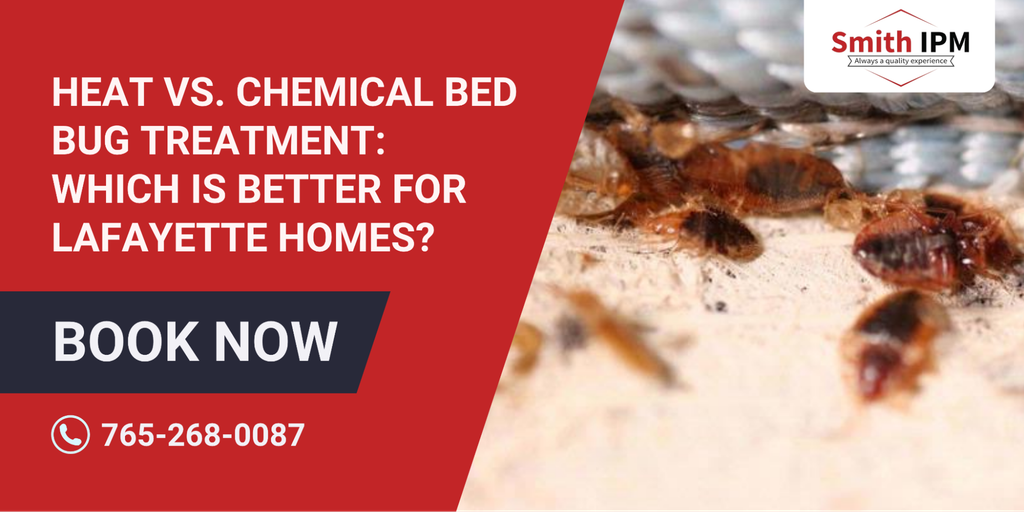
Professional heat treatment can kill bed bugs and eggs when the needed temperature reaches their hiding places for enough time. Chemical treatment can provide targeted control and, depending on the product used, may continue working after application. In many cases, an integrated approach can offer advantages over relying on one method alone.
The U.S. Environmental Protection Agency recommends an Integrated Pest Management, or IPM, approach for bed bugs. This can include inspection, heat, monitoring, cleaning, physical control methods, and properly selected pesticides when appropriate.
If you are looking for a bed bug exterminator in Lafayette, ask how the infestation will be inspected and treated rather than choosing a service based only on the words “heat” or “chemical.”
Bed bugs can hide in mattress seams, bed frames, furniture joints, baseboards, cracks, and other small spaces. The EPA notes that they can hide in cracks about the width of a credit card.
Because every infestation is different, the best treatment plan depends on the extent of activity, hiding areas, room contents, treatment preparation, safety needs, and follow-up.
What Is the Main Difference Between Heat and Chemical Bed Bug Treatment?
The main difference is how the treatment kills or controls bed bugs.
Heat raises temperatures within a treatment area to levels that can kill bed bugs at different life stages.
Chemical treatment uses pesticides labeled for bed bug control. Depending on the product and application method, these treatments may target bed bugs in cracks, crevices, furniture, and other approved locations.
Here is a simple comparison:
| Factor | Heat Treatment | Chemical Treatment |
| Main approach | Uses controlled high temperatures | Uses approved pesticides |
| Bed bug eggs | Can kill eggs when lethal heat reaches them | Effect varies by product and application |
| Treatment speed | Can affect exposed and hidden bugs during treatment | May work immediately or over time |
| Residual effect | Generally no residual protection | Some products may leave residual activity |
| Preparation | Often requires detailed preparation | Preparation varies by treatment plan |
| Sensitive belongings | Some items may need removal | Product label determines treatment areas |
| Follow-up | Monitoring remains important | Repeat visits may be needed |
| Best use | Depends on infestation and property | Depends on infestation and property |
This is why homeowners should be cautious of anyone who says one method is always the right answer before inspecting the property.
How Does Heat Treatment Kill Bed Bugs?
Professional heat treatment raises the temperature of an infested room or structure using specialized equipment.
Bed bugs cannot survive sustained exposure to sufficiently high temperatures.
The EPA states that bed bugs die when their body temperature reaches about 113°F, or 45°C. However, simply making a room 113°F does not mean every bed bug will die. The surrounding treatment area must become hotter so that lethal heat reaches bugs hidden inside furniture, cracks, and other protected areas.
EPA IPM guidance also notes that heating infested articles or areas to at least 120°F, about 49°C, for 90 minutes can kill eggs when the needed temperature reaches them.
What Are the Advantages of Heat Treatment?
Heat has several useful features.
Heat Can Reach Many Hiding Areas
Bed bugs hide in very small spaces.
When professionals manage temperatures correctly, heat can move through a room and penetrate many areas that are difficult to treat individually.
This can make heat useful when bugs are spread through furniture, beds, and other parts of a room.
Heat Can Kill Bed Bug Eggs
Eggs can make bed bug control difficult.
Properly performed heat treatment can kill both active bed bugs and eggs when the required temperature reaches the hiding area for enough time.
That is one reason heat is commonly considered for established infestations.
Heat Reduces Dependence on Pesticides
Heat provides a non-chemical control method.
That does not automatically make it the correct option for every house, but it may be useful as part of a broader pest management plan.
What Are the Limits of Heat Treatment?
Heat has important limitations.
The biggest one is that heat normally provides no residual protection after treatment.
The EPA specifically warns that practices should be in place to prevent bed bugs from being introduced again because heat treatments do not leave residual effects.
That means a successful heat treatment today cannot prevent someone from carrying another bed bug into the home later.
Heat-sensitive belongings can also require special handling.
Items that may be affected by high temperatures must be identified before treatment. Preparation instructions should always be followed carefully.
How Does Chemical Bed Bug Treatment Work?
Chemical bed bug treatment uses pesticide products registered for bed bug control.
The EPA reports that more than 300 pesticide products are registered for use against bed bugs, across several chemical classes.
These include:
- Pyrethrins
- Pyrethroids
- Desiccants
- Biochemicals
- Pyrroles
- Neonicotinoids
- Insect growth regulators
Different products work in different ways.
A pest professional may select products according to the location, infestation level, bed bug behavior, label directions, and concerns about resistance.
What Are the Advantages of Chemical Treatment?
Chemical treatments offer several potential benefits when used correctly.
Some Treatments Provide Residual Activity
Unlike heat, some properly applied pesticides can remain active on approved surfaces after treatment.
This can help expose bed bugs that leave protected hiding areas later.
The exact duration and effect depend on the product, surface, application, and label instructions.
Treatment Can Be Highly Targeted
Professionals may treat specific cracks, crevices, furniture areas, baseboards, bed frames, or other approved locations where bed bugs are likely to hide.
Targeted treatment can be useful when an inspection identifies clear activity zones.
Different Modes of Action Are Available
Bed bugs have developed resistance to some pesticides.
The EPA notes that using pesticides with different modes of action may help reduce the likelihood of resistance becoming a treatment problem.
This is one reason professional product selection matters.
What Are the Limits of Chemical Treatment?
Chemical treatment is not simply a matter of spraying a room.
A pesticide treatment may fail when:
- Important hiding places are missed
- Preparation is incomplete
- Nearby infested areas are overlooked
- A product is applied incorrectly
- Label directions are not followed
- Bed bugs have resistance to certain active ingredients
- Follow-up treatment is needed but not completed
The EPA identifies missed hiding areas, poor preparation, untreated nearby areas, and incorrect pesticide use among the reasons bed bug treatments may fail.
For this reason, repeated random spraying is not a good bed bug strategy.
Is Heat More Effective Than Chemical Treatment?
Not in every situation.
Heat can be extremely useful because it can kill bed bugs and eggs during treatment when lethal temperatures reach all necessary areas.
Chemical control has a different strength. Certain products can provide ongoing activity after the initial application.
So asking “Which is more effective?” may be less useful than asking:
Which treatment plan best addresses the specific infestation in this home?
A small, localized infestation may require a different approach than activity spread through several bedrooms.
Likewise, a single-family house can present different treatment challenges than an apartment or multi-unit property.
The EPA states that bed bug control tends to work best as part of an IPM program that combines appropriate chemical and non-chemical methods.
Can Heat and Chemical Treatments Be Used Together?
Yes. In some treatment programs, heat and carefully selected chemical methods can complement each other.
This approach recognizes that each tool has different strengths.
For example, heat may help reduce a large portion of an infestation, including eggs, while another approved treatment method may address specific areas or provide residual control after heat treatment.
Other IPM tools may include:
- Detailed inspections
- Vacuuming
- Mattress or box spring encasements
- Bed bug interceptors
- Clothes dryer treatment
- Clutter reduction
- Monitoring
- Targeted pesticide applications
- Follow-up inspections
This multi-step strategy also reflects the EPA’s recommendation to use pesticides as one part of a broader bed bug management plan rather than as the only tool.
Homeowners who want to understand this prevention-focused method can read what Integrated Pest Management means.
What Happens During a Professional Bed Bug Inspection?
Treatment should begin with confirming the problem.
Not every bite or skin irritation means bed bugs are present.
A professional inspection may look for:
- Live bed bugs
- Bed bug eggs
- Shed skins
- Dark spotting
- Activity around mattress seams
- Bed frame hiding areas
- Furniture joints
- Baseboard cracks
- Upholstered furniture
- Nearby rooms
The EPA reports that female bed bugs may lay about 1 to 3 eggs per day and 200 to 500 eggs during their lifetime. Under favorable conditions, the egg-to-egg life cycle can take about four to five weeks.
These numbers help explain why early identification matters.
Waiting can give an established infestation more opportunity to spread.
How Should You Prepare for Bed Bug Treatment?
Preparation varies according to the selected treatment plan.
Always follow the instructions provided by the pest management company.
The EPA recommends steps such as inspecting and cleaning infested areas, handling clothing and bedding carefully, reducing clutter, and avoiding unnecessary movement of potentially infested items into other rooms.
For washable belongings, washing alone may not kill all bed bugs.
EPA guidance recommends placing clothing, bedding, and other dryer-safe items in a clothes dryer on high heat for 30 minutes.
Preparation may include:
- Removing certain heat-sensitive items
- Laundering or drying clothing and bedding
- Reducing clutter
- Moving furniture when instructed
- Securing personal items
- Identifying aquariums, medications, or sensitive belongings
- Following re-entry instructions
Do not move potentially infested furniture or belongings into another bedroom without guidance. That can spread bed bugs to new areas.
Are DIY Heat Treatments Safe?
Whole-room DIY heat treatment can be dangerous.
Do not try to create professional treatment temperatures with fireplaces, propane heaters, household space heaters, or your home’s thermostat.
The EPA specifically warns that these methods may not work and may create serious fire or safety risks.
Professional heat treatment requires specialized equipment, temperature monitoring, airflow management, and knowledge of heat-sensitive materials.
A household clothes dryer can still be useful for items that are safe to dry at high temperatures.
That is very different from attempting to heat an entire room yourself.
Are DIY Bed Bug Sprays a Good Alternative?
Homeowners have access to some EPA-registered bed bug products, but product selection and application matter.
If you choose a pesticide yourself:
- Confirm bed bugs are listed on the label
- Follow the label exactly
- Never use an outdoor pesticide indoors
- Never exceed the labeled application amount
- Follow all re-entry and safety instructions
- Do not mix products unless the labels specifically allow it
The EPA also warns against dangerous home remedies such as rubbing alcohol, gasoline, and kerosene. These substances can create serious fire hazards and are not appropriate bed bug treatments.
Foggers or “bug bombs” should not be relied on as the only method either. The pesticide may not reach the cracks and crevices where bed bugs hide.
How Do You Know Whether a Bed Bug Treatment Worked?
Do not judge treatment success only by whether you stop seeing bites immediately.
Monitoring matters.
Look for:
- Live bed bugs
- New spotting
- New shed skins
- Bugs caught in interceptors
- Continued activity around beds or furniture
The EPA recommends checking for evidence every few days after initial cleanup and control. If bed bugs remain, some insects may have been missed or eggs may have hatched, which can make additional treatment necessary.
Follow-up is especially important because bed bugs are excellent at hiding.
A responsible treatment plan should explain what happens after the initial service and what signs homeowners should watch.
Which Bed Bug Treatment Is Best for Lafayette Homes?
The best option depends on the home and infestation rather than a universal rule.
Heat treatment may make sense when:
- Activity is established across a treatment area
- Killing bugs and eggs during one controlled heat process is a priority
- The property can be prepared for professional heating
- Heat-sensitive items can be managed safely
Chemical treatment may make sense when:
- Activity is concentrated in identifiable areas
- Targeted applications are appropriate
- Residual activity would benefit the treatment plan
- Follow-up applications and monitoring are practical
A combined approach may make sense when:
- The infestation requires several control tools
- Both immediate reduction and continued control are valuable
- The inspection reveals multiple hiding locations
- Long-term monitoring is part of the plan
The correct recommendation should come after inspecting the property.
You can also review the site’s information about bed bug heat treatment with post-treatment chemical application.
What Should You Ask a Bed Bug Exterminator Before Hiring?
A good conversation before treatment can prevent confusion later.
Ask questions such as:
- How will you confirm that I have bed bugs?
- Which rooms will you inspect?
- Why are you recommending this treatment method?
- Will heat, pesticides, or both be used?
- What preparation is required?
- Which belongings need special handling?
- How will temperatures be monitored during heat treatment?
- What follow-up inspection is included?
- What signs should I watch for after treatment?
- What happens if activity continues?
Also verify that the provider uses appropriately registered products when pesticides are part of the treatment.
The EPA recommends choosing an experienced, responsible pest control professional and asking for an IPM-based approach.
Frequently Asked Questions
Does heat treatment kill bed bug eggs?
Yes, when lethal temperatures reach the eggs for sufficient time. EPA guidance notes that treatment areas or infested items can be heated to at least 120°F for 90 minutes to help ensure eggs are killed. Professional temperature monitoring is important because hidden areas can heat at different rates.
Can bed bugs come back after heat treatment?
Yes. Heat has no lasting residual effect. Bed bugs may return if some protected locations do not reach lethal temperatures or if new bed bugs are later brought into the home on luggage, furniture, clothing, or other belongings.
How many chemical treatments are needed for bed bugs?
There is no reliable universal number. Treatment needs depend on the infestation, pesticide used, preparation, resistance, hiding locations, and follow-up findings. Some infestations require repeat applications.
Should I throw away my mattress if I have bed bugs?
Not automatically. Many mattresses and box springs can be treated or placed in suitable bed bug encasements. Discarding furniture without proper handling may also spread bed bugs. Ask the pest professional whether an item can be treated before replacing it.
Can I sleep in my bedroom after bed bug treatment?
That depends on the treatment method and product instructions. Follow the pest management company’s re-entry directions and all pesticide label requirements. Never enter a treatment area earlier than instructed.
Is heat or chemical treatment safer for families and pets?
Both methods require safety procedures. Professional heat treatment requires proper handling of heat-sensitive materials, while pesticides must be applied according to their EPA-approved labels. The right choice depends on the treatment plan, property, and occupants. Discuss children, pets, medical needs, aquariums, and other concerns before service.
Conclusion
Heat and chemical treatments are different tools, not competing solutions where one always wins. Professional heat treatment can kill bed bugs and eggs when the correct temperature reaches their hiding places, while properly selected chemical treatments can target specific areas and may provide residual activity. Inspection, preparation, monitoring, and follow-up often matter just as much as the treatment method itself. For Lafayette homeowners, the best first step is to confirm the infestation and understand why a particular treatment plan is being recommended. With over 30 years of combined pest management experience, Smith IPM uses a prevention-focused approach to help homeowners understand their bed bug problem and determine an appropriate treatment strategy based on the conditions found in the home.