Finding bed bugs in your home can turn a good night’s sleep into a stressful experience. You may notice itchy bites, small dark spots on your sheets, or tiny insects hiding near your mattress. Once you spot these signs, your first question is often simple: What is the best way to get rid of bed bugs?
The most effective bed bug treatment for many Lafayette homes is a professional plan that combines heat treatment, targeted chemical applications when needed, and follow-up inspections. The right approach depends on how far the infestation has spread, where the bugs are hiding, and the condition of your home.
Professional heat treatment can kill bed bugs and their eggs when the right temperature reaches their hiding places. Targeted insecticides can help treat areas that heat may miss and may provide ongoing control after application. Neither method guarantees success on its own.
If you need reliable bed bug control in Lafayette, start with a professional inspection instead of trying multiple store-bought sprays. A trained pest specialist can identify signs of infestation, assess the affected areas, and recommend the most suitable treatment for your home.
For homeowners in Lafayette, West Lafayette, and nearby parts of Tippecanoe County, understanding these options can save time and help prevent repeated infestations.
This guide explains how bed bug treatments work, what each method can and cannot do, and how to choose a plan that fits your home.
Why Are Bed Bugs So Difficult to Eliminate?
Bed bugs are small insects that feed on human blood, often while people sleep. They hide during the day and come out when they need to feed.
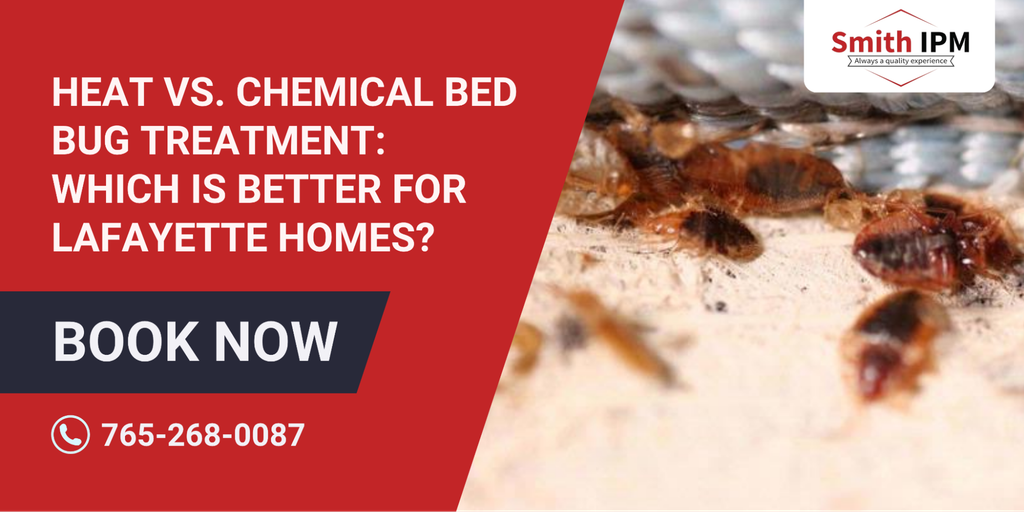
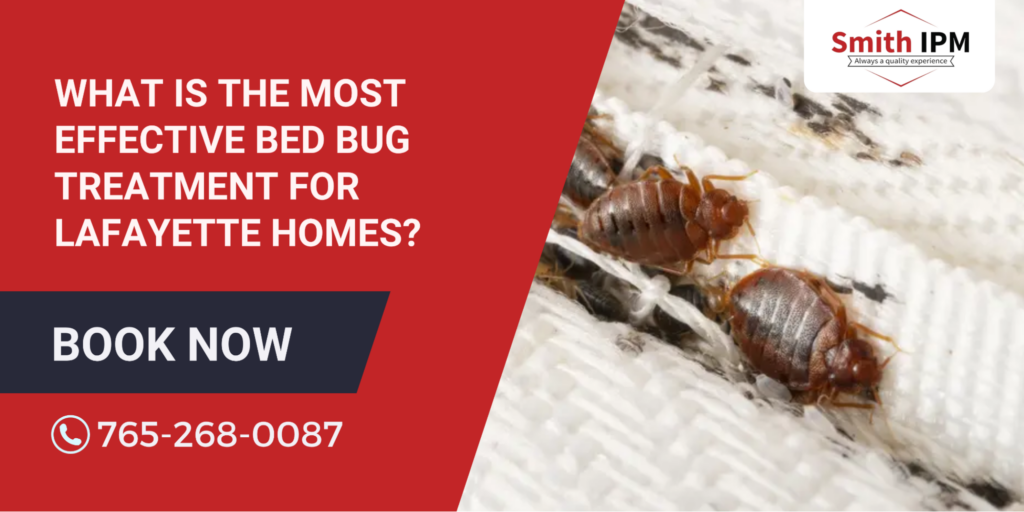
Adult bed bugs are flat, reddish-brown, and about the size of an apple seed. Young bed bugs are smaller and can be hard to spot.
Their size and behavior make them tough to control.
Bed bugs commonly hide in:
- Mattress seams and box springs
- Bed frames and headboards
- Cracks in walls and furniture
- Baseboards and nearby flooring
- Upholstered chairs and couches
- Luggage, bags, and folded clothing
They can also survive for months without feeding.
According to the Centers for Disease Control and Prevention (CDC), bed bugs are not known to spread diseases to people. However, their bites can cause itching, lost sleep, and allergic reactions in some people.
Bed bugs do not mean a home is dirty. Clean homes can have infestations too.
How Quickly Can a Bed Bug Problem Spread?
A female bed bug can lay several eggs per day under suitable conditions. Over time, a few insects can become a much larger problem.
Bed bugs also move between rooms through personal items, furniture, and other hiding places.
In apartments and other shared buildings, they may move between units.
Early action matters because a small, contained infestation is often easier to manage than one that has spread through several rooms.
What Are the Most Effective Bed Bug Treatment Options?
Homeowners usually compare three main approaches: heat treatment, chemical treatment, and a combined treatment plan.
Each has strengths and limits.
| Treatment method | Main benefit | Main limitation | Best use |
| Professional heat treatment | Can kill all bed bug life stages | Requires careful temperature control | Infested rooms or larger areas |
| Chemical treatment | Can target cracks and hiding places | May require several visits | Localized and ongoing control |
| Heat plus chemical treatment | Combines immediate treatment with targeted control | Requires planning and follow-up | Many established infestations |
| Steam treatment | Treats suitable surfaces directly | Limited reach and no residual effect | Seams and accessible areas |
| Vacuuming and encasements | Helps remove and monitor bugs | Rarely solves an infestation alone | Supporting a treatment plan |
The U.S. Environmental Protection Agency (EPA) recommends integrated pest management, or IPM, for bed bug control.
IPM uses several methods based on the pest problem instead of relying on a single product.
How Does Professional Bed Bug Heat Treatment Work?
Heat treatment raises the temperature in an affected area to levels that can kill bed bugs and their eggs.
Professionals use special heating equipment, fans, and temperature sensors to treat the space.
The goal is not just to warm the air. Heat must reach the cracks, furniture, and other places where bed bugs hide.
What Temperature Kills Bed Bugs?
The EPA states that infested items or areas can be heated to at least 120°F for 90 minutes to help ensure that eggs are killed.
Actual treatment plans may use different temperatures and exposure times. The key is to make sure the required heat reaches the insects themselves, including those deep inside their hiding places.
A room may feel hot while the center of a mattress or another hidden area remains cooler. That is why trained technicians monitor temperatures during treatment.
What Are the Benefits of Heat Treatment?
Heat treatment offers several important benefits:
- It can kill adults, young bed bugs, and eggs.
- It reaches many areas where sprays may be hard to apply.
- It does not depend on insecticide resistance.
- It can treat several hiding places during one service.
However, heat treatment has limits.
Some items cannot tolerate high temperatures. Cool spots may also allow bed bugs to survive if the treatment does not reach them.
Heat does not leave behind a chemical barrier that continues to control bugs after the room cools.
Is Heat Treatment Safe for Furniture?
Professional heat treatment can be suitable for many household items, but not everything should remain in the treatment area.
Some electronics, candles, medicines, plants, and heat-sensitive belongings may need special care or removal.
Your pest specialist should provide clear preparation instructions.
Never try to heat your home with space heaters, ovens, or other household equipment. These methods can cause fires and may fail to reach the temperatures needed for bed bug control.
How Effective Is Chemical Bed Bug Treatment?
Chemical treatment uses insecticides labeled for bed bugs. A trained professional applies them to suitable areas where bed bugs hide or travel.
These treatments may include products that work on contact and others that remain effective on treated surfaces for a period of time.
The results depend on the product, its application, and the level of infestation.
Where Are Chemical Treatments Applied?
Depending on label directions and the inspection findings, professionals may treat:
- Cracks and crevices near beds
- Bed frames and approved furniture surfaces
- Baseboards and floor edges
- Other known bed bug hiding places
Treatments should target specific areas rather than cover the entire home without a plan.
Some insecticides do not reliably kill eggs. Bed bugs may hatch after the first visit, so follow-up treatment may be necessary.
Can Bed Bugs Become Resistant to Chemicals?
Yes. Some bed bug populations have developed resistance to certain insecticides.
This means a product that works well against one population may work less effectively against another.
Professionals can account for resistance when choosing products and treatment methods.
The EPA advises using pesticides as one part of a larger bed bug control plan. Repeated spraying without a clear strategy is not a reliable solution.
Is Heat Treatment Better Than Chemical Treatment?
Heat and chemical treatments serve different purposes.
Heat can kill bed bugs quickly when the required temperature reaches them. Chemical treatments may help control bugs in specific hiding places and provide continued activity on treated surfaces.
For example, consider a Lafayette homeowner who finds bed bugs in a mattress, bed frame, and nearby dresser.
A professional may recommend heat treatment for the affected space, followed by targeted chemical applications where appropriate.
Now consider another homeowner who finds a few bed bugs near one bed.
After inspecting the property, a professional may recommend targeted treatment and monitoring instead of heating the whole home.
Neither example guarantees that a specific method will work in every situation.
The best treatment is the one that addresses the full infestation, not just the bugs you can see.
Why Can a Combined Heat and Chemical Treatment Work Well?
A combined approach uses the strengths of both methods.
Heat targets bed bugs and eggs during the initial treatment. Targeted chemical applications may help address certain hiding places or bugs that remain after heating.
This approach can be useful when the infestation has spread across furniture, bedrooms, or nearby spaces.
What Happens During a Combined Treatment?
A professional treatment plan may include these stages:
- Inspection: Identify where bed bugs are active.
- Preparation: Help the homeowner understand what must be moved or protected.
- Heat treatment: Treat the planned areas with controlled heat.
- Targeted application: Apply appropriate insecticides where needed.
- Monitoring: Check for signs of continued activity.
- Follow-up: Reassess and treat again if necessary.
The exact sequence can vary based on the home, equipment, and product labels.
Some infestations can be managed without both methods. A qualified specialist should explain why the recommended plan makes sense.
Lafayette homeowners can learn more about bed bug heat remediation with post-treatment chemical application.
How Should You Prepare Your Home for Bed Bug Treatment?
Good preparation helps the treatment reach the areas where bed bugs hide.
Before your appointment, ask your pest specialist for a checklist. The steps may change based on the treatment method.
Common preparation tasks include:
- Wash and dry bedding as instructed.
- Reduce clutter around beds and furniture.
- Keep infested items in sealed bags when moving them.
- Clear access to baseboards and bed frames.
- Identify items that may be damaged by heat.
- Follow all instructions about pets and reentry.
The EPA notes that running suitable clothing and bedding through a dryer on high heat for 30 minutes can kill bed bugs and eggs.
Washing alone may not work.
Avoid carrying untreated belongings into clean rooms. This can spread the infestation.
Do not throw away your mattress unless a professional advises you to do so. Many mattresses can be treated or protected with suitable encasements.
Can Home Remedies Eliminate Bed Bugs?
Home remedies may reduce the number of visible bugs, but they rarely address every hiding place.
Vacuuming can remove some insects and eggs from accessible surfaces. Steam can treat certain seams and cracks when used correctly.
However, these methods require care and do not provide lasting protection on their own.
Avoid using:
- Rubbing alcohol or gasoline
- Unapproved pesticide mixtures
- Excessive amounts of insect spray
- Household heaters for whole-room treatment
- Bug bombs as the only treatment method
These methods can create safety risks without solving the problem.
The EPA warns that foggers may not reach bed bugs hiding in cracks and other protected areas.
A safer approach is to confirm the infestation and develop a treatment plan before using products.
How Long Does Bed Bug Treatment Take?
The treatment schedule depends on the size of the infestation, the method selected, and how well the home is prepared.
Professional heat treatment may take several hours, including setup, heating, temperature monitoring, and cooling.
Chemical treatment may require multiple visits over several weeks.
Even after treatment, homeowners should keep checking for signs of activity.
The EPA recommends checking for signs of bed bugs at least every seven days during the control process.
A follow-up inspection helps determine whether eggs have hatched or hidden insects survived.
The absence of bites does not always mean the infestation is gone. Some people do not react to bed bug bites at all.
How Can Lafayette Homeowners Prevent Bed Bugs From Returning?
No treatment can guarantee that bed bugs will never enter your home again.
However, a few simple habits can reduce the risk of another infestation.
Inspect Furniture Before Bringing It Home
Check used mattresses, couches, chairs, and bed frames for signs of bed bugs.
Look along seams, joints, and hidden areas.
Avoid bringing discarded furniture into your home without a careful inspection.
Check Luggage After Traveling
Bed bugs can travel in luggage and personal belongings.
After staying in a hotel, inspect your bags and clothing before putting them away.
Use a hot dryer for suitable items when exposure is suspected.
Monitor Bedrooms Regularly
Check mattress seams and bed frames from time to time.
Bed bug interceptors placed under bed legs can help detect activity.
Keep bedrooms free of excess clutter so insects have fewer places to hide.
For more prevention advice, read these tips to help prevent pest infestations at home.
How Do You Choose a Reliable Bed Bug Exterminator in Lafayette?
Choosing a pest control provider involves more than comparing prices.
Look for a company that explains its inspection process, treatment options, and follow-up plan.
Before hiring a provider, ask:
- Do you inspect the home before recommending treatment?
- Do you offer heat treatment, chemical treatment, or both?
- How do you protect furniture and personal belongings?
- What preparation will my household need?
- Will you inspect the home after treatment?
- Are your applicators properly licensed?
You can also check the provider’s credentials with the Indiana Office of the State Chemist, which oversees pesticide applicator licensing in Indiana.
The EPA recommends choosing professionals who use IPM methods and provide clear follow-up plans.
Frequently Asked Questions About Bed Bug Treatment
1. What kills bed bugs permanently?
No single treatment prevents bed bugs from ever returning. Professional heat treatment can kill all life stages when applied correctly. A combined treatment plan, followed by monitoring, can help address surviving insects and reduce repeat problems.
2. Is heat treatment enough to get rid of bed bugs?
Heat treatment can eliminate an infestation when lethal temperatures reach every affected hiding place. However, cool spots or missed areas can allow bed bugs to survive. Follow-up inspections help confirm whether further treatment is needed.
3. Can bed bugs return after professional treatment?
Yes. Bed bugs may return if some insects survive or if new bugs enter through luggage, furniture, or other belongings. Regular inspections and careful travel habits can help homeowners detect new activity early.
4. Do I need to leave my home during bed bug treatment?
You will generally need to leave treated areas during professional heat treatment. Chemical treatment may also require temporary evacuation. Your pest specialist should explain the required absence and safe reentry time before treatment begins.
5. Should I throw away my mattress if I have bed bugs?
Not always. Professional treatment and bed bug mattress encasements may allow you to keep your mattress. Ask a qualified pest specialist to inspect it before deciding to replace or discard it.
6. What is the best time to schedule bed bug treatment?
Schedule an inspection as soon as you notice signs of bed bugs. These insects can remain active indoors throughout the year. Early identification helps limit their spread and may reduce the amount of treatment needed.
Conclusion: Which Bed Bug Treatment Should You Choose?
The most effective bed bug treatment depends on where the insects are hiding, how far they have spread, and the needs of your home. Professional heat treatment, targeted chemical applications, and follow-up monitoring each have a role in successful pest management.
For Lafayette homeowners, the best first step is a careful inspection and a clear treatment plan. With over 30 years of combined pest management experience, Smith IPM helps local residents identify bed bug problems and choose appropriate control methods. If you suspect activity in your home, schedule an assessment to discuss your next steps.