
Mosquito control matters for Lafayette families because mosquitoes are more than an outdoor annoyance. They can make yards, patios, gardens, and play areas difficult to enjoy. Some mosquito species can also spread disease. Reducing mosquito breeding areas and limiting bites can help families spend more time outside with greater comfort and peace of mind.
For homeowners searching for Mosquito Control in Lafayette, the most useful approach starts with prevention. That means finding places where mosquitoes can breed, reducing standing water, protecting family members from bites, and using targeted control methods when conditions call for them.
The Centers for Disease Control and Prevention reports that more than 200 types of mosquitoes live in the United States and U.S. territories. About 12 types can spread germs. (CDC) In Indiana, the Indiana Department of Health identifies West Nile virus as the most commonly reported mosquito-borne disease in the state. It is primarily spread in Indiana by Culex mosquitoes.
This does not mean every mosquito is carrying disease. Most mosquitoes are simply nuisance pests. It does mean that reducing mosquito exposure is a sensible part of protecting your family and making your property more comfortable.
Effective mosquito management is not about trying to eliminate every mosquito. It is about reducing breeding conditions, limiting mosquito populations around the property, and lowering the chance of bites.
Why Is Mosquito Control Important for Lafayette Families?
Mosquito control supports both health and everyday quality of life.
A backyard should be a place where children can play, families can eat outside, and friends can gather. Heavy mosquito activity can quickly change how people use those spaces.
For example, imagine a Lafayette family with a shaded patio, several flowerpots, a children’s play area, and gutters that hold small amounts of rainwater. Each feature seems harmless on its own. Together, they may create several places where mosquitoes can develop or rest.
Mosquito management helps address those conditions before mosquito pressure becomes harder to manage.
The main benefits include:
- Reducing mosquito breeding areas around the property
- Lowering the number of mosquitoes near outdoor living areas
- Helping reduce the chance of mosquito bites
- Making patios, decks, gardens, and play areas more comfortable
- Identifying conditions that may encourage recurring mosquito activity
- Supporting a preventive approach instead of relying only on reactive spraying
Mosquito control works best when homeowners understand what is happening around their property instead of treating every mosquito problem the same way.
What Health Risks Are Connected With Mosquitoes in Indiana?
One of the most important reasons to take mosquitoes seriously in Indiana is West Nile virus.
The Indiana Department of Health states that West Nile virus is the most commonly reported mosquito-borne disease in Indiana. Most infected people do not develop symptoms, but a small number can develop serious illness involving the nervous system.
According to Indiana health officials:
| West Nile virus outcome | Approximate share |
| No symptoms | About 80% |
| Fever or other symptoms | About 20% |
| Severe nervous system illness | Less than 1% |
People over age 60 and people with weakened immune systems or certain medical conditions face a greater risk of severe illness.
CDC also notes that there is currently no licensed vaccine or medicine that prevents West Nile virus disease in people. Preventing mosquito bites remains the main way to reduce personal risk.
These facts should encourage practical prevention, not fear. Most mosquito bites do not result in West Nile virus. Still, families can take reasonable steps to reduce mosquito exposure.
Why Do Lafayette Yards Attract Mosquitoes?
Mosquito activity often starts with water.
Mosquitoes need water during important parts of their life cycle. The EPA recommends checking properties for standing water because containers and other water-holding areas can become mosquito habitat.
Common sources include:
- Buckets
- Bird baths
- Children’s toys
- Plant saucers
- Rain barrels
- Clogged or slow-draining gutters
- Tarps
- Wheelbarrows
- Trash containers
- Neglected pools
- Low areas that hold water after rain
- Containers stored outdoors
Some of these areas are obvious. Others are easy to miss.
A flowerpot tray may hold only a small amount of water. A toy left behind a shed may fill after a storm. Leaves can collect in gutters and slow drainage. A container hidden behind shrubs can remain unnoticed for weeks.
This is why mosquito prevention should include a regular property check, especially after rain.
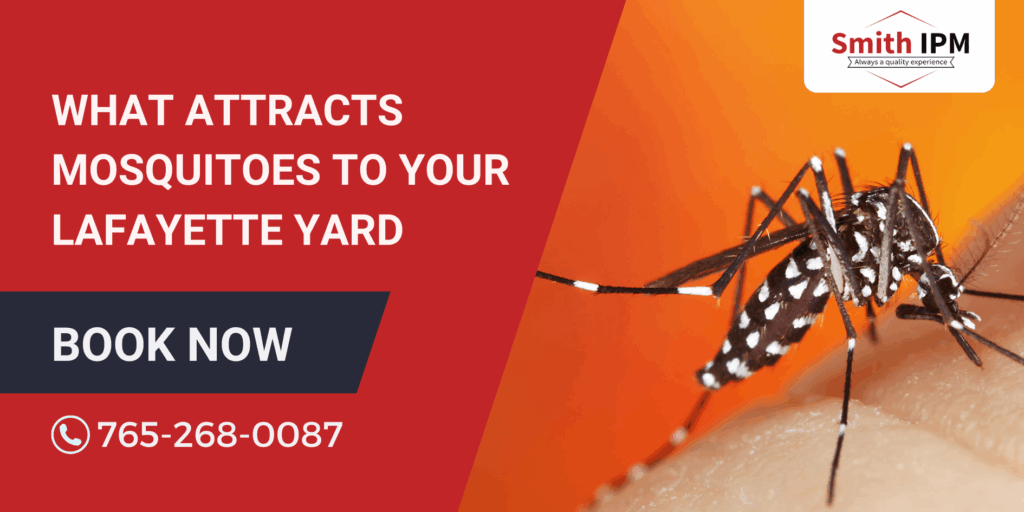
Homeowners who want a deeper look at these conditions can read what attracts mosquitoes to your Lafayette yard in the related resources section below.
How Does Standing Water Affect Mosquito Problems?
Standing water gives mosquitoes an opportunity to complete the early stages of their life cycle.
EPA guidance recommends eliminating standing water from items such as gutters, buckets, tires, toys, and plastic covers. The agency also recommends changing water in items such as bird baths and plant trays at least weekly.
For Lafayette families, a simple weekly routine can make a real difference.
Walk around the property and:
- Empty containers holding water.
- Turn unused buckets and toys upside down.
- Refresh bird bath water.
- Check plant saucers.
- Look for water collecting under decks or near patios.
- Check drainage after heavy rain.
- Keep pools maintained and circulating.
- Remove outdoor clutter that holds rainwater.
The goal is not to create a perfectly dry yard. That is unrealistic. The goal is to remove avoidable breeding opportunities.
What Is Integrated Mosquito Management?
Integrated mosquito management uses several methods together instead of depending on one treatment.
The EPA and CDC support Integrated Pest Management, or IPM, as a science-based approach that focuses on prevention, monitoring, habitat reduction, and appropriate control methods.
A mosquito-focused IPM plan may include:
- Property inspection
- Identification of breeding areas
- Standing-water reduction
- Monitoring mosquito activity
- Managing mosquito larvae where appropriate
- Targeted adult mosquito treatment when needed
- Homeowner education
- Ongoing evaluation
This matters because spraying adult mosquitoes alone does not address every stage of the mosquito life cycle.
EPA guidance notes that controlling immature mosquitoes before they become adults can play an important role in mosquito management.
Homeowners interested in the broader prevention philosophy can learn more about how Integrated Pest Management works.
How Can Mosquito Control Make Outdoor Spaces More Comfortable?
Health concerns matter, but comfort is another major reason families seek mosquito help.
Frequent bites may cause people to avoid areas they would normally enjoy. Kids may spend less time playing outside. Parents may move meals indoors. Homeowners may stop using patios in the evening.
Reducing mosquito pressure can help families use these areas more comfortably:
- Patios
- Porches
- Decks
- Playsets
- Swimming pool areas
- Gardens
- Fire pits
- Outdoor dining areas
No mosquito service can promise a completely mosquito-free yard. Mosquitoes can move between properties, and weather conditions constantly change.
A better goal is meaningful mosquito reduction combined with ongoing prevention.
That expectation is more realistic and more useful for homeowners.
When Should Lafayette Homeowners Start Mosquito Prevention?
Do not wait until mosquitoes become overwhelming.
Mosquito management works best when families begin checking breeding conditions as the weather warms and continue through periods of mosquito activity.
Rain also matters. After storms, new water-holding areas can appear quickly.
A practical routine is to inspect the property after rainfall and throughout warm weather.
Pay extra attention when:
- Several days of warm weather follow rain
- Mosquito bites suddenly increase
- You notice mosquito larvae in standing water
- Family members avoid the yard because of biting activity
- Containers repeatedly collect water
- Dense vegetation stays damp and shaded
Seasonal timing can vary because temperature, rainfall, drainage, vegetation, and nearby properties all affect mosquito populations.
For more detail, see the best time to control mosquito breeding in Indiana in the related articles below.
What Can Families Do to Prevent Mosquito Bites?
Property management is only one part of protection. Families should also reduce their exposure to bites.
CDC recommends EPA-registered insect repellents, long and loose-fitting clothing, window and door screens, and extra care during dusk and dawn when mosquitoes associated with West Nile virus are especially active.
A simple family checklist includes:
- Use an EPA-registered repellent as directed.
- Follow the product label carefully.
- Wear long sleeves and pants when practical.
- Keep window and door screens in good condition.
- Avoid leaving doors open longer than needed.
- Remove standing water around the yard.
- Check outdoor containers after rain.
- Use mosquito netting when appropriate for babies or young children.
Parents should follow product labels and CDC or EPA guidance when choosing repellents for children.
When Is Professional Mosquito Control Worth Considering?
DIY prevention is important and should continue even when a professional service is used.
Professional help may make sense when mosquito activity remains high despite regular standing-water removal or when homeowners cannot identify where the activity is coming from.
Consider an assessment when:
- Mosquitoes remain heavy around patios or play areas
- Bites happen regularly in your yard
- You find several potential breeding areas
- Water cannot be removed from certain locations
- The property has heavy vegetation or shaded resting areas
- Mosquitoes return quickly after DIY efforts
- You want a more structured preventive plan
A professional should inspect conditions before recommending a strategy.
Smith IPM’s approach focuses on identifying mosquito pressure and conditions around the property, then building an appropriate management plan. Homeowners can learn more about its mosquito breeding control service.
What Should You Look for in a Mosquito Control Provider?
Choose a provider based on its process, not just promises.
Look for a company that:
- Uses an inspection-based approach
- Explains what may be attracting mosquitoes
- Discusses standing-water reduction
- Uses products according to label directions
- Explains what homeowners should do between visits
- Sets realistic expectations
- Uses an IPM-based strategy
- Carries appropriate licensing and insurance
- Has experience with local pest conditions
Be cautious of anyone who promises to permanently eliminate every mosquito.
Mosquitoes can enter a yard from neighboring properties, drainage areas, vegetation, and other nearby habitats. Good mosquito management focuses on reducing pressure and limiting breeding opportunities.
A useful provider should also point out property conditions you can correct.
For example, a technician may identify damaged screening, drainage concerns, or areas around the property that could be improved. Smith IPM does not seal homes or openings. Instead, the company can help customers identify areas that may need sealing or another correction.
Is Mosquito Control Safe Around Families and Pets?
This question deserves a clear answer: safety depends on the product, application method, site conditions, and whether label instructions are followed.
EPA evaluates registered mosquito-control pesticides for their intended uses. Professionals should apply products according to the approved label and consider the property, target pest, and treatment area.
Homeowners should feel comfortable asking:
- What product will you use?
- Where will you apply it?
- Why is that area being treated?
- What should children or pets do during treatment?
- When can the family return to the treated area?
- Are there plants, ponds, or other areas that need special care?
A trustworthy pest professional should answer these questions clearly.
FAQs About Mosquito Control in Lafayette
1. What is the best way to reduce mosquitoes in my yard?
Start by removing standing water and checking containers after rain. Keep bird baths, plant trays, gutters, toys, and outdoor containers from holding stagnant water. Combine habitat reduction with bite prevention and targeted professional control when needed. EPA recommends an integrated approach rather than relying on one method alone.
2. Why are mosquitoes so bad after rain?
Rain can fill buckets, toys, gutters, plant saucers, low spots, and other containers. These water sources may provide mosquito breeding habitat. Checking the yard soon after rain helps remove new breeding opportunities before mosquito development continues.
3. Can mosquitoes breed in small amounts of water?
Yes. Mosquitoes can use surprisingly small water-holding containers. EPA specifically identifies items such as toys, plant trays, buckets, tires, and other containers as possible mosquito habitat.
4. What time of day are mosquitoes most active?
Activity depends on the mosquito species. Culex mosquitoes associated with West Nile virus are especially active between dusk and dawn. CDC advises taking added precautions during these hours.
5. Does mosquito treatment eliminate every mosquito?
No responsible provider should promise that. Mosquitoes can fly in from surrounding areas, and new breeding areas can develop after rainfall. A good program aims to reduce mosquito pressure and address conditions that support recurring activity.
6. How can I protect my children from mosquito bites?
Remove standing water around play areas, maintain screens, use protective clothing when practical, and use an EPA-registered insect repellent according to its label. CDC recommends bite prevention as the best way to reduce the risk of West Nile virus.
Conclusion
Mosquito control is important for Lafayette families because it supports both health and outdoor comfort. The strongest approach begins with prevention. Remove standing water, inspect the yard regularly, protect family members from bites, and pay attention to conditions that allow mosquitoes to return.
When mosquito activity remains difficult to manage, an inspection can help identify breeding areas, resting sites, and other conditions that homeowners may overlook. Families who want professional guidance can schedule a mosquito and pest assessment rather than guessing which treatment their property needs. With over 30 years of combined pest management experience, Smith IPM helps Lafayette families understand mosquito concerns and build practical, prevention-focused management plans without making unrealistic promises.